It's been a busy couple of weeks here with the holidays in full swing with Christmas and New Years. My mini training camp is going well, although my training schedule has been modified significantly to accommodate family and friends. Here are some quick updates:
- Christmas with the family was a blast! My brother and sisters are scattered throughout the US so it's great to see them again during the holidays as we all converge at my parent's house. I hear about other people dreading going home to visit their family and I'm thankful that our whole clan gets along well and enjoys spending time with each other. Hopefully that continues even as we go on to start families of our own!
- Traveling and the holidays have put a damper on my training. Trips to Louisville (work) and Las Vegas (play), and an upcoming Seattle trip (friends) are shuffling my training days so I'm trying to pack in as much as I can during the days I have open so I can treat those 'off' days as proper rest days. So far it's going pretty well, I don't feel like I'm overloading myself on the 'on' days and I still feel my strength growing from workout to workout.
- W/Kg is up a bit. I tested my FTP last week and picked up a few extra watts to play with. That combined with a bit of unintentional weight loss helped me move up a little on the power-to-weight chart. I do think I need to start eating more though, since I don't want to lose any more weight right now. The trick is to eat the right things and not just stuff my face with junk food. Maybe I'll set a New Year's resolution to find a nutritionist and finally put together a proper nutrition plan.
Wednesday, December 29, 2010

Wednesday, December 22, 2010
Rev3 Triathlon Series
By now most of you have probably heard about Rev3, the small upstart challenging the WTC in long distance triathlons. If you haven’t heard about it yet, head on over to Slowtwitch and read their latest article which features the Rev3 Triathlon series and its founder, Charlie Patten.
It’s clear that there’s a large demand for more Ironman and 70.3 type races, but it must require large amounts of capital to really get a race series going. The Slowtwitch article hints at some of the Rev3 backers and the expected return of investment for the private company, but with the prize purses offered at Rev3 events it seems that the initial investment must have been quite large. I wonder how much it costs to run a full Ironman distance event itself… Just a couple years ago there were several independent Iron distance races around the country, but it seems like most of them have folded or scaled back their efforts to half-Iron distances. There’s still several good full Ironman distance races out there (Redman, Silverman, Great Floridian, Beach 2 Battleship), but they seem to be far and few between. Independent half-Ironman races seem to get swallowed up every year by the ever-expanding WTC.
I know a lot of people would rather support smaller organizations than a large corporation like the WTC. How this sentiment will extend to the smaller (but still corporate) Rev3 races remains to be seen. For local half distance races, the WTC has taken over most of the major races in the area (Racine, Steelhead, Muncie), with the Door County Half remaining independent. This year alone I noticed many more people I know signed up for Door County instead of Racine or Steelhead, and several indicated that this was due to the fact that Door County was NOT a Ironman 70.3 branded race. Some of them told me they preferred to support a local race organization while others said it came down to the registration fees (the Ironman 70.3 races were almost twice as expensive). For full distance races, Ironman Wisconsin is the default race for most athletes in my area simply due to its proximity.
A couple friends of mine competed in the Rev3 Cedar Point race this year and they gave it positive reviews. One of the big things they raved about was Rev3’s refund policy, which they felt was much more reasonable than the WTC refund policy. It does seem like Patten and the rest of the Rev3 crew are focusing heavily on the customer service aspect of races:
The moment that sparked Patten to dream up Rev3 came when he was waiting in line to sign up for Ironman Lake Placid after finishing the 2008 race in 12 hours 15 minutes. “The thought came into my mind while I was waiting in line,” said Patten. “The supply of quality races must be very low if athletes are dishing over $500 one year in advance. And people were securing their accommodations for the following year while they were checking out of their hotel on Monday after the race. What sealed the deal for me was the fact that a lot of those athletes were complaining about having to commit so far in advance.”Supply and demand, two of the most basic terms in economics. Even today as the WTC hikes up registration fees most of their races continue to sell out. Clearly there’s more demand than supply right now, and the WTC understands that which is why they continue to raise race fees and introduce new Ironman races around the world. The past couple of years alone have seen the introduction of Ironman Cozumel and Ironman St. George, not to mention several other new 70.3 races.
It’s clear that there’s a large demand for more Ironman and 70.3 type races, but it must require large amounts of capital to really get a race series going. The Slowtwitch article hints at some of the Rev3 backers and the expected return of investment for the private company, but with the prize purses offered at Rev3 events it seems that the initial investment must have been quite large. I wonder how much it costs to run a full Ironman distance event itself… Just a couple years ago there were several independent Iron distance races around the country, but it seems like most of them have folded or scaled back their efforts to half-Iron distances. There’s still several good full Ironman distance races out there (Redman, Silverman, Great Floridian, Beach 2 Battleship), but they seem to be far and few between. Independent half-Ironman races seem to get swallowed up every year by the ever-expanding WTC.
I know a lot of people would rather support smaller organizations than a large corporation like the WTC. How this sentiment will extend to the smaller (but still corporate) Rev3 races remains to be seen. For local half distance races, the WTC has taken over most of the major races in the area (Racine, Steelhead, Muncie), with the Door County Half remaining independent. This year alone I noticed many more people I know signed up for Door County instead of Racine or Steelhead, and several indicated that this was due to the fact that Door County was NOT a Ironman 70.3 branded race. Some of them told me they preferred to support a local race organization while others said it came down to the registration fees (the Ironman 70.3 races were almost twice as expensive). For full distance races, Ironman Wisconsin is the default race for most athletes in my area simply due to its proximity.
A couple friends of mine competed in the Rev3 Cedar Point race this year and they gave it positive reviews. One of the big things they raved about was Rev3’s refund policy, which they felt was much more reasonable than the WTC refund policy. It does seem like Patten and the rest of the Rev3 crew are focusing heavily on the customer service aspect of races:
"When we decided to put on major triathlons, we made it our mission to truly try our hardest to put the customers first and understand our clients’ needs.”Customer service could be the secret ingredient to success for Rev3 as they continue to ramp up their races. If they can show consumers that a Rev3 race is a superior substitute to an Ironman branded race they should be able to steal market share away from the WTC and its subsidiaries. Heck, they just need a couple more incidents like the Ironman 70.3 Miami race fiasco to really push them over the top.
Sunday, December 19, 2010
Ironman coverage on NBC
Yesterday I watched the IM Kona coverage on NBC after a mid-day bike/run brick workout. I settled in with my food and drinks while in my compression gear and got ready to watch the 2 hour highlight show of the world championships. I followed the live web coverage during the actual race so I already knew the outcome but I was excited to see how they would present the showdown between Macca and Raelert during the final miles of the marathon.
As usual the show did not disappoint. It was a good combination of race coverage and human interest stories (although many on SlowTwitch disagree), with a little more race coverage than year's past. Personally I like seeing more race coverage than human interest stories but I’m more familiar with the pros than the average person that NBC/WTC target with their coverage. I doubt the average person watching the show also watches ITU coverage on Universal Sports or has their Tivo set to record anything with the word “triathlon” in the title.
One thing I noted during the show that was different this year than last year was the advertising coverage. I don’t recall seeing many big ads last year that were specifically targeted at triathletes, yet this year there were major commercials by mainstream brands like Ford that featured pro triathletes (like Chris Lieto). I’ll tip my hat to the folks at Ford, they did a great job specifically targeting triathlon users with their advertising; the Ford commercials caught my eye and had me watching the whole 30 second segments. Wheaties Fuel also had Hunter Kemper in their commercials but they didn’t really give him a speaking role or call him out. I think that was a big miss by Wheaties, how hard would it have been to have an alternate version of that spot with the focus on Hunter Kemper? Other brands that did a good job are Tyr with their use of Andy Potts, Sarah Haskins and Chrissie Wellington, and K-Swiss with commercials featuring Terenzo Bozzone and Chris Lieto. PowerBar and RoadID had decent advertisement as well. I also noticed a couple WTC 5150 commercials.
Some people are complaining about the use of in-show advertisement (i.e. Ford, RoadID, PowerBar), but I think that’s just the nature of television advertisement today. In this day and age of Tivo, integrated advertisements are sometimes an effective way to capture viewer’s attentions, so long as the advertisement is not too heavy and doesn’t detract from the show. I’ll admit some of the Ford and RoadID placement was a little aggressive but I think it worked well within the coverage.
As usual the show did not disappoint. It was a good combination of race coverage and human interest stories (although many on SlowTwitch disagree), with a little more race coverage than year's past. Personally I like seeing more race coverage than human interest stories but I’m more familiar with the pros than the average person that NBC/WTC target with their coverage. I doubt the average person watching the show also watches ITU coverage on Universal Sports or has their Tivo set to record anything with the word “triathlon” in the title.
One thing I noted during the show that was different this year than last year was the advertising coverage. I don’t recall seeing many big ads last year that were specifically targeted at triathletes, yet this year there were major commercials by mainstream brands like Ford that featured pro triathletes (like Chris Lieto). I’ll tip my hat to the folks at Ford, they did a great job specifically targeting triathlon users with their advertising; the Ford commercials caught my eye and had me watching the whole 30 second segments. Wheaties Fuel also had Hunter Kemper in their commercials but they didn’t really give him a speaking role or call him out. I think that was a big miss by Wheaties, how hard would it have been to have an alternate version of that spot with the focus on Hunter Kemper? Other brands that did a good job are Tyr with their use of Andy Potts, Sarah Haskins and Chrissie Wellington, and K-Swiss with commercials featuring Terenzo Bozzone and Chris Lieto. PowerBar and RoadID had decent advertisement as well. I also noticed a couple WTC 5150 commercials.
Some people are complaining about the use of in-show advertisement (i.e. Ford, RoadID, PowerBar), but I think that’s just the nature of television advertisement today. In this day and age of Tivo, integrated advertisements are sometimes an effective way to capture viewer’s attentions, so long as the advertisement is not too heavy and doesn’t detract from the show. I’ll admit some of the Ford and RoadID placement was a little aggressive but I think it worked well within the coverage.
Friday, December 17, 2010
Video with Robbie Ventura: Recovery

Over on the Versus website Robbie Ventura talks about a key factor in making gains in cycling: recovery. Athletic growth doesn't happen while you're doing your workouts, but rather it happens afterwards as your body recovers and your muscles repair themselves. The more you train the better you will get, but you need to give yourself proper time to recover from your intense workouts.
"There's no such thing as over-training, just under-recovery"
3 important elements to recovering from hard training:
1) Get a solid 8 hours of sleep
2) Eat well - proper mix of carbohydrates, protein and fat
3) Cool down after high intensity sessions
After that you can add on other methods for recovery like massage, compression gear and the Normatec boots. I've got the cool down going, but I'm still working on the first two items from Robbie's list. I'm close to a solid 8 hours of sleep but I have bouts of insomnia from time to time. My nutrition is a lot better this year than it was last year but I think I still have room for improvement there. I've been thinking about seeing a nutritionist to review my diet but I haven't acted on that yet. I guess it couldn't hurt to get an assessment on my diet to see if I'm really off base or pretty close to a good mix.
To watch the video head on over the Coaches Corner on Versus.
Wednesday, December 15, 2010
Best Buy Portable Fitness Electronics

I was at Best Buy the other day looking for headphones and I stumbled upon a new section in the store for Portable Fitness Electronics. I'm not talking about the Nike+ iPod kits or Timex watches or anything basic like that, I'm talking some pretty heavy duty stuff like the Garmin Forerunner 310XT, SwiMP3 and other swim audio players, and even a Finnis Tempo Trainer! All they needed was a PowerTap SL+ and I would have been covered with all my fitness gadget needs!
When did these gadgets come to Best Buy? The last time I stopped in there I didn't see anything like this (aside from the Nike+ iPod kits). I did a little research and from what I've gathered Best Buy just recently added these electronics to half of its stores, in an attempt to capitalize on the growing $500 billion wellness and fitness industry. I'd be very interested to see how these toys sell over the holiday season in comparison to other consumer electronics. At my local Best Buy the Portable Fitness Electronics section had a pretty prime location near the front of the store.
Well, now I know what to use my Best Buy gift cards on this holiday season! I think I'm finally going to go ahead and buy the SwiMP3 player to help me pass the time in the pool. It was on my Tri Toys Wish List last year and after I picked up the Garmin 310XT this spring I think it's time for me to check off another item from the list.

Sunday, December 12, 2010
Snowy Days
We're in the middle of a snowstorm this weekend here in Chicago, and luckily for me I managed to get my workouts in this morning before it got too bad outside. Not to say that I trained outside, since almost all of my training these days is indoors. I know a lot of people still keep training outside even when the temperatures drop below freezing, but I'm a bit of a cold weather wimp. My biggest issue with cold weather (aside from the coldness of it) is the fact that I have a hard time breathing properly when exercising in cold air. I always feel short of breath and my lungs and throat burn pretty bad when breathing in the harsh air.
Over on the Training Peaks blog they have a couple options for cold weather training, both for heartier athletes and cold weather wimps like me. One item from their list that I might look into this year is Cross-Country Skiing. It looks like fun and from what I've heard it's a pretty good total body workout. I know some friends who travel up to Wisconsin to do this every year, so I may have to join them this year. I'll have to rent all the equipment though, so hopefully that doesn't get too pricey. I already have one high-priced hobby to keep my wallet busy. :)
Over on the Training Peaks blog they have a couple options for cold weather training, both for heartier athletes and cold weather wimps like me. One item from their list that I might look into this year is Cross-Country Skiing. It looks like fun and from what I've heard it's a pretty good total body workout. I know some friends who travel up to Wisconsin to do this every year, so I may have to join them this year. I'll have to rent all the equipment though, so hopefully that doesn't get too pricey. I already have one high-priced hobby to keep my wallet busy. :)
Saturday, December 11, 2010
Rest of December
Now that my school finals are over for this quarter I have a whole 3 weeks off before classes start up again in January! I'm traveling a bit for work this month but that shouldn't be too bad, just a couple days here and there during the week. So now that I have a good amount of free time on my hands I wonder what I'm going to do with it?
Last year I did a little mini training camp during the month of December, and although I don't *need* to do it again this year I think I'll probably still do something similar. Last year I was having a hard time finding a consistent training schedule and I used the mini training camp to try to kick up my off-season training into high gear. This year that hasn't been a problem. I've been consistent with my in-week training, and I've been flexible with my weekend training to accommodate my social calendar.
Mini training camp starts this weekend, and continues for the next 3 weeks. I expect to be able to take full advantage of all the training options at VQ, including biking, functional training, yoga, running, swimming and maybe even some massage therapy to smooth out the load. Let the 2010 December Mini Training Camp fun begin! :)
Last year I did a little mini training camp during the month of December, and although I don't *need* to do it again this year I think I'll probably still do something similar. Last year I was having a hard time finding a consistent training schedule and I used the mini training camp to try to kick up my off-season training into high gear. This year that hasn't been a problem. I've been consistent with my in-week training, and I've been flexible with my weekend training to accommodate my social calendar.
Mini training camp starts this weekend, and continues for the next 3 weeks. I expect to be able to take full advantage of all the training options at VQ, including biking, functional training, yoga, running, swimming and maybe even some massage therapy to smooth out the load. Let the 2010 December Mini Training Camp fun begin! :)
Sunday, December 5, 2010
On Pause
Training and blogging are on pause for a bit due to personal travel, school finals and work travel. I should be able to get back into it full steam next weekend.
Tuesday, November 30, 2010
Giving thanks
Sometimes it's a little hard to get out of bed for your early morning workouts. Take this morning for example. I was scheduled for an early workout session at VQ, but as I woke up and saw how dark and cold it was outside, and I thought about the full day of work and school ahead of me, all I wanted to do was hit the snooze button and go back to sleep.
After a couple of minutes I dragged myself out of bed, and after eating a quick snack and putting on my workout clothes I headed over to VQ. I was in a pretty groggy mood until I got to VQ, and the all of a sudden I felt better. I don't know what it was, but even though I knew I was in for a super long 18 hour day I was really happy to be there at that moment. It was a great feeling and I was happy to start my day with it.
That feeling of happiness made me realize how lucky I am to be in a position where I'm at today, where I can derive joy and excitement from the activities I do in my life. I know so many struggle with the work life balance and I feel like I've been blessed by finding an extracurricular activity that balances out my professional life pretty well. And for that I am very thankful.
After a couple of minutes I dragged myself out of bed, and after eating a quick snack and putting on my workout clothes I headed over to VQ. I was in a pretty groggy mood until I got to VQ, and the all of a sudden I felt better. I don't know what it was, but even though I knew I was in for a super long 18 hour day I was really happy to be there at that moment. It was a great feeling and I was happy to start my day with it.
That feeling of happiness made me realize how lucky I am to be in a position where I'm at today, where I can derive joy and excitement from the activities I do in my life. I know so many struggle with the work life balance and I feel like I've been blessed by finding an extracurricular activity that balances out my professional life pretty well. And for that I am very thankful.
Monday, November 29, 2010
WTC Brand Crisis
 |
| Photo by Michael Dawes |
(Reprinted from Six to Nine Scholar)
In the triathlon community, any controversy that arises is eventually discussed heatedly on the forums at Slowtwitch.com, the leading forum for endurance athletes. On the last weekend of October, the forums at Slowtwitch were active with a new scandal revolving around the World Triathlon Corporation (WTC), the owners of the Ironman Triathlon brand. The negative outburst from the community, and the subsequent handling of the event by the WTC reminded me of a framework for managing scandals we learned about in our Marketing courses. I’m not certain if the WTC management used the exact steps we covered at school but the way they responded to the situation certainly fit into the framework provided.
The framework for managing scandals comes from the case “Let the Response Fit the Scandal” by Alice M. Tybout and Michelle Roehm. The case provided a step-by-step guide for companies to craft a proper response to negative events that may cause damage to their brand. The framework provided had four steps:
- Assess the Incident - Is the scandal or negative event pertinent to the central attribute of the company or brand? If the negative event is tangential to the company or brand, is there a chance of a spillover effect damaging the company or brand?
- Acknowledge the Problem - If the company is likely to be impacted by the scandal, it should be swift in publicly acknowledging the problem and outlining steps it is taking to investigate and stop further damage from the scandal.
- Formulate a Strategic Response - Once a company has acknowledged the problem, it must craft a strategic response to the scandal. This includes clarifying false allegations or creating a plan to address and resolve true allegations.
- Implement Response Tactics - Once a strategic response has been prepared, the company must then work on implementing the response and communicating the plan to the consumer in a proper fashion.
With this framework in mind we’ll look at the incident that took place on October 30th at the inaugural Miami Ironman 70.3 race in Miami, FL and the WTC’s response to the triathlon community.
The World Triathlon Corporation (WTC) is a for-profit corporation, owned by Providence Equity Partners, that organizes, promotes and licenses the Ironman Triathlon, Ironman 70.3, and the 5150 series of triathlon races. The WTC is also the owner of numerous "Ironman" related trademarks used both in connection with Ironman race series' and in conjunction with various goods and services. (Wikipedia)
On October 30th the inaugural Rohto Ironman 70.3 Miami race took place in Miami, FL. The event was run by Paramount Productions, a local event management company, which had licensed the Ironman 70.3 name from the WTC. (The WTC charges $150,000 for event naming rights). Unfortunately for race participants, the event was not run properly and left many dissatisfied with the experience. Some of the reported problems at the race included overcrowded transition areas, lack of water at aid station, and a poorly planned race course that had some athletes running over the same bridge eight times. Race participants and spectators quickly flooded popular social media sites like Twitter, Facebook and Slowtwitch with their complaints about the Miami 70.3 race.
On November 2nd, the WTC responded to the complaints in a press release (Ironman.com):
WTC recognizes the many problems that athletes experienced in Ironman 70.3 Miami this past weekend. While this event is licensed to Miami-based Paramount Productions and not produced by WTC, we take your dissatisfaction seriously. In an effort to restore full confidence in the quality, safety and overall experience in this event, WTC is doing the following:
1. Effective immediately, WTC is taking over the operational planning, management and execution of this event for 2011. The event will be incorporated into our operations system and produced at the high-quality level you expect from our other races.
2. For all athletes who competed in the race on Saturday, WTC is offering a complimentary race entry into any of the 70.3 races in 2011 listed below, to include next year’s Ironman 70.3 Miami. WTC will contact those competitors on December 1 with registration instructions.
WTC and its family of races appreciates your support and looks forward to seeing you in 2011.
Using the framework presented above, we can break down the incident and review the WTC management’s response to the situation and see how it fits into the guidelines provided.
- Assess the Incident - Although the event was not run by the WTC itself, it had licensed the brand name to Paramount productions and as such it was tied directly (in the mind of their customers) to the scandal. A high level of quality is expected at all Ironman and 70.3 events around the world and the Miami 70.3 race failed to live up to this expectation.
- Acknowledge the Problem - In this day and age of social media, the negative word of mouth can spread almost instantaneously. Even before the race started reports were spreading out about the sloppy conditions at the race. By the end of the weekend many participants had taken to Twitter, Facebook and popular forums such as Slowtwitch to express their dissatisfaction with the race. The WTC had to act quickly to curb the negative feedback from the community.
- Formulate a Strategic Response - The WTC quickly mentioned that the Miami 70.3 race was not put on by its production company, but rather by Paramount Productions. In doing so they attempted to clarify the false allegations that it was a poor WTC-run event. However, they also addressed the true allegations stemming from the race itself for future participants, by immediately taking over the operational planning, management and execution of the event for 2011, assuring a high level of quality that is expected from the Ironman brand.
- Implement Response Tactics - The WTC press release detailed the strategic plan above but went one step further and extended a complimentary race entry to any other WTC 70.3 event. The WTC also indicated that they would contact the competitors on December 1st with registration instructions. In doing so the WTC ensured that their message would be received by all impacted customers. This offering also served as a gesture of goodwill to the community that was then quickly shared through the same social media that was used to spread the scandal.
For the most part the community response has been positive, with many applauding the WTC for its swift response to the Miami 70.3 scandal and its gesture of goodwill towards participants. However, one thing to consider is how this event will weigh on the minds of athletes when they go to sign up for their next Ironman or 70.3 race: are they signing up for a WTC-run event or a WTC-licensed event with an unknown production company?
All this comes on the heels of another scandal generated by the WTC itself. The week prior to this incident, the WTC rolled out a new program called Ironman Access. The program was a premiere service primarily designed to give customers priority access to future race registrations along with other small benefits. The program charged a $1,000 a year for membership. The feedback on this program was overwhelmingly negative, with many decrying the WTC for being overly greedy and out of touch with their customer base. In response to this sharp reaction from the community, the WTC ended the program one day after it started and Ben Fertic, President and CEO of WTC, issued a public apology.
Was the WTC losing touch with the everyday triathlete? Long time members of the triathlon community say the WTC began to lose touch in 2008, when it was purchased by Providence Equity Partners. Since then, the WTC has experienced massive growth that has led to an expansion of WTC-branded races and the exploration of new revenue opportunities that have not always been viewed favorably by the triathlon community. Was the WTC abusing its dominant position as the triathlon market leader?
The WTC and the Ironman brand operate in a near monopoly model in the long-distance triathlon race market. There are a few individual non-WTC races throughout the US, including a small competing Rev3Tri brand, but for the most part when people refer to an Ironman distance race, they are referring to a WTC branded event. (In fact, the term Ironman is itself a genericized trademark, similar to Kleenex). The price to compete in an Ironman event has steadily increased over the last couple of years ($550+), leaving many to harbor ill feelings towards the WTC and its perceived greedy corporate practices. Still, the majority of Ironman races continue to sell out each year, and the WTC has added more Ironman races around the world in an attempt to meet the surging demand for long-distance triathlon races.
In 2006 the WTC extended its brand into the middle-distance triathlon race market with the introduction of the Ironman 70.3 brand. The 70.3 brand refers to half Ironman races (the 70.3 being the total distance in miles covered as opposed to the 140.6 in a full Ironman). The WTC has been rapidly growing this brand through the introduction of new middle-distance races and acquisitions of competing middle-distance races.
Recently the WTC announced that they would extend their brand even further down the triathlon ladder into the Olympic distance race with the introduction of the 5150 brand (5150 being the total distance in kilometers of a standard Olympic distance race). For the rollout of this brand the WTC has primarily acquired existing races and re-branded them under the 5150 banner. The short-distance triathlon race market is much more fragmented and has more independent players than the middle and long distance market. It remains to be seen if the 5150 brand will have as much success as the Ironman 70.3 brand.
Although the World Triathlon Corporation has earned some goodwill with its handling of the Miami 70.3 scandal, it still has work to do to restore its brand image and earn back the brand loyalty it had from years past. Consumer sentiment is at an all-time low towards the WTC and many believe the brand is being spread too thin across the triathlon market, and that the WTC is abusing its position in the market and simply trying to satisfy its investors rather than its consumers. As the WTC continues to step into new distances it encounters more competitors: Rev3Tri, TriRock, Life Time Fitness and even the ITU (International Triathlon Union). Can the World Triathlon Corporation continue its aggressive expansion plan and how will consumers react to its new events in 2011 and beyond?
Saturday, November 27, 2010
Video with Robbie Ventura: Functional Training
In this video (reposted from the CycleOps website), VQ's very own Robbie Ventura talks about functional training for endurance athletes. What is it, and why should you do it?We like to make all of our athletes in Vision Quest stronger, and we want to make them more athletic, resilient, as well as more durable and injury free.
Tuesday, November 23, 2010
Strength-Endurance Training
The strength training phase of my off-season plan is in full swing now, with intense SE (strength-endurance) work on the bike trainer and functional training making up the bulk of my workouts. My legs are still twitching from a heavy SE interval work training session we did at VQ tonight.
SE work has been described to me as weight training for your legs on the bike. It’s basically high power/low cadence combinations that put a heavy load on your leg muscles and help build up your strength for the coming season. Alan Couzen from Endurance Corner goes into much greater detail in his articles about torque and strength training:
SE work has been described to me as weight training for your legs on the bike. It’s basically high power/low cadence combinations that put a heavy load on your leg muscles and help build up your strength for the coming season. Alan Couzen from Endurance Corner goes into much greater detail in his articles about torque and strength training:
When it comes down to ‘nuts and bolts’ in order for a cyclist to produce more power he must either increase his cadence (revolutions per minute) or increase the force that he is imparting on the pedals (his torque). While cardiovascular capacity clearly plays a role in the cyclists ability to remain ‘aerobic’ while producing the requisite force, it does not change the fact that there is a minimal force that is required in order to produce competitive race powers and consequent speeds.Last year I really didn’t like SE work. It’s slow laboring work that’s really boring and monotonous. It’s probably my least favorite phase of the year. This year is no different but I think now that I’m more in tune with my body and power I have a deeper respect for SE work and recognize the value that comes from it. So even though I don’t like it I’m going to suck it up and grind my way through this SE phase, knowing that I’m going to come out stronger on the other end.
Saturday, November 20, 2010
Benefits of indoor cycling training
As the winter months hit here in the Midwest I'm sure many people are starting to log a lot of time on their indoor trainers. I personally enjoy the trainer for its time effectiveness but I know a lot of people actively dislike spending time biking indoors. Well, just in time for the off-season is this timely article from Training Peaks on the benefits of indoor cycling training.
- Time efficiency - As someone who lives in the city this is a big one for me. I love the great outdoors but sometimes I just have to knock out a workout and move on to the next thing on my list.
- Safety - It's scary how common it is to hear a horror story about someone getting hit on their bikes while they’re out on the road. I know you can’t live your life in fear but it’s reassuring to know you don’t have to worry about cars while on your trainer.
- Focus - You can really dial in your workout on the trainer. You don’t have to worry about traffic lights, stop signs, or wind and you can specify the intensity with pinpoint accuracy at every point of the ride.
- Effectiveness - This one goes hand in hand with time efficiency and focus. You can really dial in your workout in a short period of time for maximum efficiency.
- Social - Well, I know some people who ride solo in their pain caves at home so this last item doesn't really apply to them. Others, like me, train with a group and this last one is pretty nice. I see no need to suffer the long winter months by yourself if you can help it. It just makes the workouts go faster and it lets you push yourself harder as you see everyone else around you pushing just as hard.
- Time efficiency - As someone who lives in the city this is a big one for me. I love the great outdoors but sometimes I just have to knock out a workout and move on to the next thing on my list.
- Safety - It's scary how common it is to hear a horror story about someone getting hit on their bikes while they’re out on the road. I know you can’t live your life in fear but it’s reassuring to know you don’t have to worry about cars while on your trainer.
- Focus - You can really dial in your workout on the trainer. You don’t have to worry about traffic lights, stop signs, or wind and you can specify the intensity with pinpoint accuracy at every point of the ride.
- Effectiveness - This one goes hand in hand with time efficiency and focus. You can really dial in your workout in a short period of time for maximum efficiency.
- Social - Well, I know some people who ride solo in their pain caves at home so this last item doesn't really apply to them. Others, like me, train with a group and this last one is pretty nice. I see no need to suffer the long winter months by yourself if you can help it. It just makes the workouts go faster and it lets you push yourself harder as you see everyone else around you pushing just as hard.
Wednesday, November 17, 2010
Wrapping up your race season
Last month I read an article called “How to Wrap Up Your Racing Season” on Active.com, and I thought it would be a fun exercise to run through their process of reflecting on this season and planning for the next. I know I’m a little late on this, considering that my race season ended over a month ago, but I figure better late than never.
1. What were the best parts of this season? Try to list at least three items. The items might include your favorite race experience, speed improvements in events or training, staying healthy, consistent training, traveling to new events, finding new training partners or purchasing new equipment.
The best parts of my season were bumping up my FTP number, shaving 4 minutes off of my mile swim time, and the first two thirds of my Chicago Triathlon race.
2. Get specific on the highlights. For the items you listed in step 1, try to state them in a way that someone else could easily identify what you're talking about. For example, if you wrote "Had a Great Race at the Round the City Crit", expand that statement to say what made the race great. Did you place high in the field? Did you help a teammate do well? Get on the podium? If you wrote "Had a fantastic century ride", describe what elements made it fantastic?
- Bump in my FTP number - After an almost year long plateau on my FTP number I finally saw an improvement in the spring. It wasn't a huge jump (only 5%) but it was still a big moment for me.
- Shaving 4 minute off of my mile swim time – After taking almost 9 months off of swimming last off-season I had pretty much written off my swim for the year. But through personal training sessions I managed to improve my form and I shaved ~11% off of my swim time!
- Chicago Triathlon – My improved swim and bike fitness came through in spades during my last race of the season, putting me on track for a monster PR. Unfortunately the intense heat fizzled me out on the run, but I was still happy with the huge improvement in my two ‘weaker’ legs.
3. Why did the specifics in step 2 trip your trigger? These elements may be covered in step 2; but if they are not, get specific about why these highlights were important to you. Perhaps you made it on the podium for the first time and this has been a three-year goal? Perhaps helping teammates in races made you feel good about giving fitness to help someone else? Maybe you rode a century with someone that really struggled, but you helped them through it. It is important to identify why results, behaviors or situations are enjoyable to you.
Again, the improvement I saw in my two ‘weaker’ legs made these accomplishments really important to me. The run is definitely my strongest weapon, and I tend to rank pretty high in the field when it comes to the run, but normally my bike is only average and my swim is really poor relative to the field. This year my bike went from average to good, and my swim went from poor to average, and overall my performance has gone from MOP to slightly behind the FOP, so I’m getting there.
4. What were the greatest disappointments of your season? You may not have any disappointments or you may have a few. Go ahead and list them.
I didn't have a complete triathlon race I was happy with this year.
5. Get specific on disappointments. Similar to highlights, do your best to identify the specifics of a disappointing situation. If you didn't train consistently and that was disappointing, define inconsistent. For example, "I'm disappointed that I rode only two days per week for 12 of 16 weeks. There were two weeks I didn't ride at all."
I just can’t seem to bring it together on race day and put together a complete performance I’m happy with. I know I’m capable of a much better Olympic PR than I have today, but things never seem to line up right on race day. I’m not sure if its nerves, bad luck or lack of preparation, but it just doesn't go down the way I envision it going down.
6. If you could have changed anything about this season, what would that be? Improve nutrition? Include more interval training? Get more structured about training? Less structured? Improve nutrition?
Given my erratic schedule with school and work I was pretty happy with my training during the season. What I wish I could have changed was improving the consistency of my training during the last off-season, especially with the swim and the bike.
7. Get specific on improvements. If you want to improve nutrition, what does that mean? An example of a nutrition improvement would be to eat two whole fruits per day, at least five days per week. Notice that the improvement or goal allows for some imperfection. Be careful about aiming for improvements that are all or nothing, requiring you to be perfect.
I didn't swim for 9 months last off-season! That’s simply inexcusable. I still managed to shave off 4 minutes from my swim time this year, but imagine how much better I could have gotten if I had actually put in some pool time before summer got here. As for the bike, I wish I would have put in more solid base hours during the off-season.
8. What do you want to accomplish next season? List three to six things you want to accomplish next season. What are your goals? Perhaps you want to include strength training in your workout plan. Maybe you want to complete your first week-long event. Want to try racing? Perhaps you want to stay healthy next year--avoiding illness or injury.
My goals for the next season are the same as the ones for this season. I can’t do long distance right now, so I want to work on my speed and power on the short course. I’m closer to being in the FOP this year and next year I want to solidify my position there. That means getting faster on the swim, bike and run.
9. Get specific on goals. Goals can be related to a training plan, workout details, race results, lifestyle changes or stress management, to name a few. When you write down your goals, be sure you can measure success. How will you know if you've reduced stress? What will that look like? Can you see it? Feel it? In the stress example, you may need to add a descriptor. For example, "Reduce stress by attending yoga once or twice each week."
There’s still a lot of room for improvement in my swim time, and this off-season I’m taking swim clinics and continuing my private lessons to work on my technique. My goal here is to shave off another 4 minutes (12%) by next season.
On the bike I’m shooting for a 3.5 W/kg power rating. I have to improve my wattage by 15% in order to get there. That’s a bit of a daunting challenge but I’m going to take it 5% at a time and chip away at it. Slowly but surely I’ll get there.
On the run I feel like I’m reaching a point of diminishing returns but I’m stubborn and really want to crack the 19 minute mark on a 5k soon. I’m going to put this as an incidental goal for next year, if I hit it, great, but if not that’s OK too. The focus is on the swim and the bike and as long as I can keep improving there I’ll be happy.
…
How would you fill out this checklist?
1. What were the best parts of this season? Try to list at least three items. The items might include your favorite race experience, speed improvements in events or training, staying healthy, consistent training, traveling to new events, finding new training partners or purchasing new equipment.
The best parts of my season were bumping up my FTP number, shaving 4 minutes off of my mile swim time, and the first two thirds of my Chicago Triathlon race.
2. Get specific on the highlights. For the items you listed in step 1, try to state them in a way that someone else could easily identify what you're talking about. For example, if you wrote "Had a Great Race at the Round the City Crit", expand that statement to say what made the race great. Did you place high in the field? Did you help a teammate do well? Get on the podium? If you wrote "Had a fantastic century ride", describe what elements made it fantastic?
- Bump in my FTP number - After an almost year long plateau on my FTP number I finally saw an improvement in the spring. It wasn't a huge jump (only 5%) but it was still a big moment for me.
- Shaving 4 minute off of my mile swim time – After taking almost 9 months off of swimming last off-season I had pretty much written off my swim for the year. But through personal training sessions I managed to improve my form and I shaved ~11% off of my swim time!
- Chicago Triathlon – My improved swim and bike fitness came through in spades during my last race of the season, putting me on track for a monster PR. Unfortunately the intense heat fizzled me out on the run, but I was still happy with the huge improvement in my two ‘weaker’ legs.
3. Why did the specifics in step 2 trip your trigger? These elements may be covered in step 2; but if they are not, get specific about why these highlights were important to you. Perhaps you made it on the podium for the first time and this has been a three-year goal? Perhaps helping teammates in races made you feel good about giving fitness to help someone else? Maybe you rode a century with someone that really struggled, but you helped them through it. It is important to identify why results, behaviors or situations are enjoyable to you.
Again, the improvement I saw in my two ‘weaker’ legs made these accomplishments really important to me. The run is definitely my strongest weapon, and I tend to rank pretty high in the field when it comes to the run, but normally my bike is only average and my swim is really poor relative to the field. This year my bike went from average to good, and my swim went from poor to average, and overall my performance has gone from MOP to slightly behind the FOP, so I’m getting there.
4. What were the greatest disappointments of your season? You may not have any disappointments or you may have a few. Go ahead and list them.
I didn't have a complete triathlon race I was happy with this year.
5. Get specific on disappointments. Similar to highlights, do your best to identify the specifics of a disappointing situation. If you didn't train consistently and that was disappointing, define inconsistent. For example, "I'm disappointed that I rode only two days per week for 12 of 16 weeks. There were two weeks I didn't ride at all."
I just can’t seem to bring it together on race day and put together a complete performance I’m happy with. I know I’m capable of a much better Olympic PR than I have today, but things never seem to line up right on race day. I’m not sure if its nerves, bad luck or lack of preparation, but it just doesn't go down the way I envision it going down.
6. If you could have changed anything about this season, what would that be? Improve nutrition? Include more interval training? Get more structured about training? Less structured? Improve nutrition?
Given my erratic schedule with school and work I was pretty happy with my training during the season. What I wish I could have changed was improving the consistency of my training during the last off-season, especially with the swim and the bike.
7. Get specific on improvements. If you want to improve nutrition, what does that mean? An example of a nutrition improvement would be to eat two whole fruits per day, at least five days per week. Notice that the improvement or goal allows for some imperfection. Be careful about aiming for improvements that are all or nothing, requiring you to be perfect.
I didn't swim for 9 months last off-season! That’s simply inexcusable. I still managed to shave off 4 minutes from my swim time this year, but imagine how much better I could have gotten if I had actually put in some pool time before summer got here. As for the bike, I wish I would have put in more solid base hours during the off-season.
8. What do you want to accomplish next season? List three to six things you want to accomplish next season. What are your goals? Perhaps you want to include strength training in your workout plan. Maybe you want to complete your first week-long event. Want to try racing? Perhaps you want to stay healthy next year--avoiding illness or injury.
My goals for the next season are the same as the ones for this season. I can’t do long distance right now, so I want to work on my speed and power on the short course. I’m closer to being in the FOP this year and next year I want to solidify my position there. That means getting faster on the swim, bike and run.
9. Get specific on goals. Goals can be related to a training plan, workout details, race results, lifestyle changes or stress management, to name a few. When you write down your goals, be sure you can measure success. How will you know if you've reduced stress? What will that look like? Can you see it? Feel it? In the stress example, you may need to add a descriptor. For example, "Reduce stress by attending yoga once or twice each week."
There’s still a lot of room for improvement in my swim time, and this off-season I’m taking swim clinics and continuing my private lessons to work on my technique. My goal here is to shave off another 4 minutes (12%) by next season.
On the bike I’m shooting for a 3.5 W/kg power rating. I have to improve my wattage by 15% in order to get there. That’s a bit of a daunting challenge but I’m going to take it 5% at a time and chip away at it. Slowly but surely I’ll get there.
On the run I feel like I’m reaching a point of diminishing returns but I’m stubborn and really want to crack the 19 minute mark on a 5k soon. I’m going to put this as an incidental goal for next year, if I hit it, great, but if not that’s OK too. The focus is on the swim and the bike and as long as I can keep improving there I’ll be happy.
…
How would you fill out this checklist?
Sunday, November 14, 2010
Holiday eats
The holidays are coming and for many people that means facing the challenge of holiday gorging and overeating. I personally enjoy gorging myself every now and then and I like to partake into some heavy eating during the holidays. Most athletes are in the off-season right now anyways, so why not take some time to indulge with your friends and family? For those of you that are holding a steady off-season training plan it’s also a good opportunity to show off your bottomless-pit eating capabilities.
If you’re looking for some tips on holiday eating, you can check out Pip Taylor’s article over on the Triathlete website titled “Triathlon Nutrition: Enjoy The Off-Season, But Don’t Regret It”.
If you’re looking for some tips on holiday eating, you can check out Pip Taylor’s article over on the Triathlete website titled “Triathlon Nutrition: Enjoy The Off-Season, But Don’t Regret It”.
Wednesday, November 10, 2010
Triathlon trends
Looks like the news media has finally discovered what we triathletes have known for years now: the sport of triathlon is growing rapidly and everyday people are embracing it. Triathlons are not just for hardcore Ironmen (and women) anymore, they’re for all individuals who are seeking to live a healthy, active lifestyle.
Two recent articles in major media outlets (CNN & The Wall Street Journal) have recently highlighted this trend. They’ve showcased everyday people, ranging from young professionals to mothers, who have taken up triathlon as a way to stay health and regain some of their youthful athleticism. Chuck Menke, direction of marketing and communications at USA Triathlon, states that over the last five years USAT membership has gone from 50,000 to 135,000 annual members. But why is there such a huge growth in triathlon now?
Menke says "it's a combination of the Olympics -- triathlon made its debut in the 2000 Sydney games -- a growing group of middle-aged competitors looking to reclaim their athleticism, and a desire for fitness-conscious camaraderie.”
I believe that over the years the general population has become more aware of the benefits of exercise as one gets older, and many have turned to some form of sport as their primary form of activity. Running and marathons were the go-to sport for aspiring adult athletes, but this decision has slowly changed over time. For starters, the jarring effects of running have taken a toll on the aging adult athlete, and these individuals have turned to triathlon for the cross-training benefits. Others see triathlon as a new challenge to conquer, a new arena where they can test their weekend warrior skills.
Is the sport of triathlon reaching a tipping point with the masses? Nine months ago I reference articles that hinted that triathlon was the new social status symbol for professionals and that it had potentially replaced the sport of golf for the business class. Will this trend continue?
Two recent articles in major media outlets (CNN & The Wall Street Journal) have recently highlighted this trend. They’ve showcased everyday people, ranging from young professionals to mothers, who have taken up triathlon as a way to stay health and regain some of their youthful athleticism. Chuck Menke, direction of marketing and communications at USA Triathlon, states that over the last five years USAT membership has gone from 50,000 to 135,000 annual members. But why is there such a huge growth in triathlon now?
Menke says "it's a combination of the Olympics -- triathlon made its debut in the 2000 Sydney games -- a growing group of middle-aged competitors looking to reclaim their athleticism, and a desire for fitness-conscious camaraderie.”
I believe that over the years the general population has become more aware of the benefits of exercise as one gets older, and many have turned to some form of sport as their primary form of activity. Running and marathons were the go-to sport for aspiring adult athletes, but this decision has slowly changed over time. For starters, the jarring effects of running have taken a toll on the aging adult athlete, and these individuals have turned to triathlon for the cross-training benefits. Others see triathlon as a new challenge to conquer, a new arena where they can test their weekend warrior skills.
Is the sport of triathlon reaching a tipping point with the masses? Nine months ago I reference articles that hinted that triathlon was the new social status symbol for professionals and that it had potentially replaced the sport of golf for the business class. Will this trend continue?
Sunday, November 7, 2010
RunTri data
Not sure if everyone has seen the RunTri website that has Ironman race data analysis and graphs showing some really interesting trends. My favorite bytes of data are the Ironman Wisconsin 2010 charts and the North American Ironman DNF Rates chart.
The Ironman Wisconsin: Correlation Between Bike and Run Splits chart shows just how well the racers paced themselves on the bike and run legs of the race. They basically plotted bike splits against run splits and broke down the racers into four groups: Fast & Balanced, Energy to Burn, Left it on the Bike Course, and Smooth & Steady. You want to be in that first group but I guess most people would settle for the last group too.

The North American Ironman DNF Rates: Finishers and DNF by Race chart shows the DNF (Did Not Finish) rates for the 2010 North American Ironman races. Ironman Wisconsin had a 6% DNF rate, but Louisville and St. George led the way with 16% and 14% respectively. I know Louisville was super hot this year and St. George is supposed to be ridiculously challenging so those DNF rates don't surprise me. I actually have some friends who just signed up for St. George next year. I wonder what they would think of this DNF rate!

The Ironman Wisconsin: Correlation Between Bike and Run Splits chart shows just how well the racers paced themselves on the bike and run legs of the race. They basically plotted bike splits against run splits and broke down the racers into four groups: Fast & Balanced, Energy to Burn, Left it on the Bike Course, and Smooth & Steady. You want to be in that first group but I guess most people would settle for the last group too.
The North American Ironman DNF Rates: Finishers and DNF by Race chart shows the DNF (Did Not Finish) rates for the 2010 North American Ironman races. Ironman Wisconsin had a 6% DNF rate, but Louisville and St. George led the way with 16% and 14% respectively. I know Louisville was super hot this year and St. George is supposed to be ridiculously challenging so those DNF rates don't surprise me. I actually have some friends who just signed up for St. George next year. I wonder what they would think of this DNF rate!
Tuesday, November 2, 2010
So far, so good
I had an awesome trainer session this morning at VQ. I just felt really strong the whole time and was able to push it pretty hard without fading. Hopefully this is a sign of good things to come this off-season. Even as my work/school schedule has picked up this past week or so I've tried to remain consistent with my training, which is something that eluded me all last year. My weekends are still pretty off right now (I'm catching up on all my drinking, ha), but that's OK, those will settle in shortly.
To recap, my October my training consisted of: bike trainer sessions, functional training and even a swim clinic. Not much running so far. The swim clinic is a 6 week clinic that's focused on Triathlon Off-Season Conditioning. The goals of the clinic are:
(1) Improving stroke efficiency for longer freestyle swims
(2) Exposing you to some heart rate zones to help your aerobic development, and
(3) Giving you training sets to start improving your aerobic base for the 2011 triathlon season.
So far, so good!
To recap, my October my training consisted of: bike trainer sessions, functional training and even a swim clinic. Not much running so far. The swim clinic is a 6 week clinic that's focused on Triathlon Off-Season Conditioning. The goals of the clinic are:
(1) Improving stroke efficiency for longer freestyle swims
(2) Exposing you to some heart rate zones to help your aerobic development, and
(3) Giving you training sets to start improving your aerobic base for the 2011 triathlon season.
So far, so good!
Thursday, October 28, 2010
What I'm Reading: Bike edition Pt. 2
 More bike service & app news! The first one is called Capital Bikeshare and is based around the Washington DC area. The service uses a technology called BIXI that allows riders to access the bikes via a special key card. It seems to be pretty low hassle and affordable. Definitely one to check out this weekend for everyone headed to DC for the Rally to Restore Sanity (like our friend Chuck over at Chicago Bike!)
Another bike-sharing system making use of new technology is SoBi, the Social Bicyle System.
SoBi is the first public bike share system to rely entirely on wireless technology for tracking, locating and unlocking bikes. The system is compromised of three elements: the social cyclist, the central server and the social bicycle.Here's a video of SoBi in action.
Here’s how it will work: after creating a SoBi account — via web, mobile phone or street kiosk — a cyclist will have unlimited access to bicycles in the bike share system, which will be equipped with GPS, a secure lock and wireless communications. Once the cyclist locates an available bike, he can use a pin code to unlock it. The central server will approve and track the transaction.
And last up we have an iPhone app that lets you use your iPhone as a bike computer. This is pretty cool for casual techy bike riders, but as a more advanced bike rider I don't think this little app holds a candle to a standard power meter (although it is a lot cheaper, just a $100 kit).
Monday, October 25, 2010
Busy again
Classes are back in full swing, and I'm involved in more clubs and organizations this year than I was last year so school is dominating a lot of my free time right now. But, unlike last year, I'm managing to hold a consistent training schedule during the week. That's huge for me! My weekends are still pretty spotty (catching up on my social life) but I'm holding a steady 3-4 training sessions during the week. The sessions have been mostly biking, strength training and yoga so far, but I have kicked up my swim again (another big improvement over last year's off-season). I haven't put much focus on the run yet, but I'll get there. All in all I would say I'm off to a good start this off-season.
Wednesday, October 20, 2010
10 Performance Tips from Chrissie Wellington
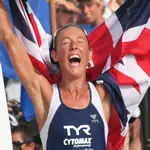
There's a great article over on Active.com that has 10 performance tips from Chrissie Wellington. I wonder if they wrote this before or after she pulled out of Kona this year. They may have to add on one more tip, #11 - Stay healthy and try not to get the flu before your major A-race of the year! :P Kidding of course, I love Chrissie and was disappointed that she was unable to defend her title this year.
Here are my favorite tips from her list:
Performance tip #1: Passion gets you further than gear.Amen to this, too many people get caught up in the latest gear and forget what got them interested in triathlon in the first place.
"You've really got to be passionate and enjoy the sport and never lose sight of that. Amateurs sometimes get caught up in the minutia. You've got to have the latest bike and this, that and the other thing. You have to keep the love for the sport in mind."
Performance tip #2: More isn't always better.Quality over quantity, that's my motto.
"There's always a tendency to think that more is better, especially with regard to Ironman training. People think, 'I have my log book and I have to be a slave to it and log as many hours as I can.' Whereas for me, people are always surprised that I don't do as much volume as they think. Don't get me wrong; I work incredibly hard. But always err on the side of quality rather than quantity."
Performance tip #8: Develop a deep understanding of your own body.Knowing how hard and how long you can go is key to race success.
"People say how do you know how fast to go? I've trained at that pace I know I can sustain for X number of hours. Whether you train with a power tap or heart rate monitor or another device, that's all well and good, but you need to be able to control your own effort and your own intensity and internalize that race pace so when you get onto the course you know what pace you can sustain. When everything's hurting 30K into the marathon, no heart rate monitor is going to help you."
You can read the full article over on Active.com.
Thursday, October 14, 2010
Pro insight
 USA Today has a series of diary entries from Chris Lieto covering his whole 2010 Kona experience. I love reading articles like this because they give regular age-groupers like us insight into the mind of pro triathletes.
Chris didn't do as well this year as he did last year, but he still have a great performance worthy of a champion. I was really rooting for him this year after last year's gutsy performance but it wasn't his day on Saturday. My other favorite, Craig Alexander, also didn't do as well as he did last year, but that's the nature of Ironman Hawaii. I spoke with a friend who just got back from Kona and she said it was one of the hardest races she's ever done. The heat and wind are overwhelming and it's truly a race where you have to have a perfect day to come out on top. I can't wait to see the NBC coverage on December 18th!The day is done, the fight is over, some would say I lost, but the battle was won. I fought hard out there all day, took the risks to try and win and the day did not go as planned. I may have lost the ultimate prize of becoming world champion, but I pushed through some of the most difficult times in my professional career and came home with the prize of top American.
Sunday, October 10, 2010
Ironman Live
I watched a lot of the Ironman Hawaii championship yesterday live via the Ironman website. They had a live video feed and status updates going throughout the day that made you feel like you were there. I'll tip my hat to the WTC folks, they did a great job with the live coverage and commentaries; not only was it informative but it was also pretty captivating. They had 8+ hours of airtime to fill during the race!
Not only was I watching the live video, the live status updates (with select tweets from the #IMKona hashtag) but I was also watching the power feeds of several athletes on the SRM.de website. I read an article last week about TJ Tollakson's odd bike setup for Kona, and in the article they mention that TJ would be live streaming the data from his SRM power meter during the race on the SRM.de website. I headed over there during the race and sure enough I could see the power numbers for certain pros including TJ, Cameron Brown and Faris Al-Sultan. Those guys were pushing some monster numbers for an Ironman; high 200's and low 300's whenever I checked in on the site. Wow, I wonder what their FTP number and W/Kg are!
The men's race came down to an exciting shootout between Chris McCormick (Macca) and Andreas Raelert, with Macca shooting ahead at the end to take the lead. Craig Alexander gave up too much time on the bike this year and couldn't make it up on the run, while Chris Lieto faded a lot faster than he did last year. There was a lot of talk over Chris Lieto's improved run form over last year but unfortunately it wasn't his day yesterday and he was caught easily on the run by the top contenders. On the women's side the sudden drop out of Chrissie Wellington left the doors wide open for Julie Dibbens and Mirinda Carfrae. Julie crushed the swim and the bike as expected but Mirinda managed to overtake her during the marathon. Great performances all around, especially for the Aussies!
Not only was I watching the live video, the live status updates (with select tweets from the #IMKona hashtag) but I was also watching the power feeds of several athletes on the SRM.de website. I read an article last week about TJ Tollakson's odd bike setup for Kona, and in the article they mention that TJ would be live streaming the data from his SRM power meter during the race on the SRM.de website. I headed over there during the race and sure enough I could see the power numbers for certain pros including TJ, Cameron Brown and Faris Al-Sultan. Those guys were pushing some monster numbers for an Ironman; high 200's and low 300's whenever I checked in on the site. Wow, I wonder what their FTP number and W/Kg are!
The men's race came down to an exciting shootout between Chris McCormick (Macca) and Andreas Raelert, with Macca shooting ahead at the end to take the lead. Craig Alexander gave up too much time on the bike this year and couldn't make it up on the run, while Chris Lieto faded a lot faster than he did last year. There was a lot of talk over Chris Lieto's improved run form over last year but unfortunately it wasn't his day yesterday and he was caught easily on the run by the top contenders. On the women's side the sudden drop out of Chrissie Wellington left the doors wide open for Julie Dibbens and Mirinda Carfrae. Julie crushed the swim and the bike as expected but Mirinda managed to overtake her during the marathon. Great performances all around, especially for the Aussies!
Wednesday, October 6, 2010
McMillan Running Calculator
So if 19:00 is not a realistic goal for me at the 5K right now, what would have been a more appropriate goal? For that I turn to the McMillan Running Calculator, which uses your running time at a certain distance to estimate your times for other distances. I decided to use my best mile time, which I just recorded over the summer during track practices. We did the mile time as a performance indicator and I believe my best mile time was ~5:40 (I didn't write it down, I was ~5:50 the first time we did it this summer and I know my second time was faster). So, if I plug in 5:40 for my mile time into the calculator I get back a 5K time of … 19:38! Awww, that’s not good! I know I’m faster than that! Shoot… maybe my mile time was just slow… I thought I went all out but maybe I had a little more. What if I plug in 5:30, what’s my predicted 5K time then? 19:03! Hmmm, maybe I still have a little bit more to go before I can break 19 minutes at the 5K distance. Or maybe this calculator is wrong! :P
Bucktown 5K race report
Well, that didn't go well! I missed my goal by a whole minute so I wasn't even close. I would say it sucked, but even with a crappy performance I still pulled out a respectable time. My official chip time was 20:37 but the course was long (it was 3.2 miles according to several Garmin wearers), so my average pace came in at 6:27.
It was a chilly morning (~50 degrees) on Sunday, but at least it wasn't raining like the forecast indicated. I laced up my new Lunaracers and did a quick warm-up before lining up near the front for the start.
The horn went off and away we go! I started out a little hot (sub 6) but quickly settled into a 6:00 minute pace like I had planned. Things were going well but I noticed my speed dropping a bit and I kept having to kick it up a little to hit my target pace for the first mile. By the time I hit the clock display at mile 1 it said 6:10. Crap, I was already way off pace! (Btw, I wonder if this is where the “long” part of the course was… my friend said he heard a lot of watches go off early before the 2nd mile marker… I didn't compare my Garmin watch distance to the course until the end, when I realized it was .10 miles long). I tried to stick to my plan of doing a 6:07 pace for the next mile but every time I checked my pace I just saw it get slower and slower... by the time I hit the second mile clock I was 30 seconds off pace, and it wasn't going to get any better. I felt flat footed, out of breath, and my legs felt heavy. I just didn't have it that day. By the time I had a ½ mile left I was at a 6:50 pace and I just tried to keep it under 7’s to finish. No kick at the end, just a steady slog through the finish line. At the end I saw my time was 20:37 but that’s when I realized the course was long, so minus that extra bit I would have been right at 20:00.
So even with my crappy performance I pulled off a time I would have been very happy with last year. Heck, I would have been very happy with that time even at the start of this summer. I wonder if I just reached too far in going for a sub 19 minute time. If I had started off a little slower and aimed for a 19:15 or even a 19:30 would I have been able to hit my goal? Anyways, that’s the last race in my 2010 tri/run/bike season, it’s time for the off-season!
It was a chilly morning (~50 degrees) on Sunday, but at least it wasn't raining like the forecast indicated. I laced up my new Lunaracers and did a quick warm-up before lining up near the front for the start.
The horn went off and away we go! I started out a little hot (sub 6) but quickly settled into a 6:00 minute pace like I had planned. Things were going well but I noticed my speed dropping a bit and I kept having to kick it up a little to hit my target pace for the first mile. By the time I hit the clock display at mile 1 it said 6:10. Crap, I was already way off pace! (Btw, I wonder if this is where the “long” part of the course was… my friend said he heard a lot of watches go off early before the 2nd mile marker… I didn't compare my Garmin watch distance to the course until the end, when I realized it was .10 miles long). I tried to stick to my plan of doing a 6:07 pace for the next mile but every time I checked my pace I just saw it get slower and slower... by the time I hit the second mile clock I was 30 seconds off pace, and it wasn't going to get any better. I felt flat footed, out of breath, and my legs felt heavy. I just didn't have it that day. By the time I had a ½ mile left I was at a 6:50 pace and I just tried to keep it under 7’s to finish. No kick at the end, just a steady slog through the finish line. At the end I saw my time was 20:37 but that’s when I realized the course was long, so minus that extra bit I would have been right at 20:00.
So even with my crappy performance I pulled off a time I would have been very happy with last year. Heck, I would have been very happy with that time even at the start of this summer. I wonder if I just reached too far in going for a sub 19 minute time. If I had started off a little slower and aimed for a 19:15 or even a 19:30 would I have been able to hit my goal? Anyways, that’s the last race in my 2010 tri/run/bike season, it’s time for the off-season!
Thursday, September 30, 2010
Ready to run
Armed with a fresh pair of Nike Lunaracers I had a great tempo run on Monday with Fleet Feet and a good track workout earlier today. I'm feeling ready to PR my 5K this weekend. The goal at the Bucktown 5K: sub 19 minutes. This is a pretty aggressive goal for me, considering my 5K PR is 19:38 (set two years ago), but I do feel a lot faster this year. We'll see if all those track workouts and hard tempo runs will pay off.
Alright, so to go sub 19 I have to average a 6:07 pace. My game plan for the race will be to start out a little fast, settle into my goal pace, and then hold on until the end. I think my breakdown of mile splits will be 6:00 for the first mile, 6:07 for the second mile, and 6:15 for the last mile. I'll sprint out whatever energy I have left in the last quarter mile.
Hopefully I don't blow up before the end. Even if I start losing steam before the end of the race I should be able to beat my 5K PR easily so it should be a good day. I would be happy with anything under 19:30, but I'm still going to gun hard for that sub 19 finish time. Might as well go for it while I still can!
Alright, so to go sub 19 I have to average a 6:07 pace. My game plan for the race will be to start out a little fast, settle into my goal pace, and then hold on until the end. I think my breakdown of mile splits will be 6:00 for the first mile, 6:07 for the second mile, and 6:15 for the last mile. I'll sprint out whatever energy I have left in the last quarter mile.
Hopefully I don't blow up before the end. Even if I start losing steam before the end of the race I should be able to beat my 5K PR easily so it should be a good day. I would be happy with anything under 19:30, but I'm still going to gun hard for that sub 19 finish time. Might as well go for it while I still can!
Saturday, September 25, 2010
Shoe replacement
After some pretty rough runs this week I was starting to get a little worried about my shot at a 5K PR next week, but I think I might have figured out the culprit. I think my shoes might be to blame for my poor running lately. I train with Nike Lunaracers, and I keep forgetting that they're not really trainers, they're more like racing flats than anything else. Which means they don't really last that long, which means I have to replace them every 10 weeks after just 150-200 miles.
I really like the shoes, they're the lightest fastest shoes I've ever worn, but this lack of durability might lead me to split with them soon. At $100 a pair they're not cheap. I'm going to head into Fleet Feet today to pick up a fresh pair, but I think I might also check out some other options in the lightweight trainer division while I'm there. I'll probably stick with the Lunaracers for the rest of this year but I think I need to start exploring more affordable alternatives.
Hopefully with a fresh pair of shoes I'll be running a lot smoother next week.
I really like the shoes, they're the lightest fastest shoes I've ever worn, but this lack of durability might lead me to split with them soon. At $100 a pair they're not cheap. I'm going to head into Fleet Feet today to pick up a fresh pair, but I think I might also check out some other options in the lightweight trainer division while I'm there. I'll probably stick with the Lunaracers for the rest of this year but I think I need to start exploring more affordable alternatives.
Hopefully with a fresh pair of shoes I'll be running a lot smoother next week.
Monday, September 20, 2010
Summer is coming to an end
Well, summer is officially over for me, as this week I return to classes full force. Over the summer I was only taking 1 class (Finance) to give myself time to enjoy the weather, but now that the Fall quarter is starting I need to get back into school full speed ahead so I can finish at some point in 2012. In about two more weeks I'll be done with all my races this year.
Sunday, September 19, 2010
IT band issues
I'm a little injured coming off of the 4-Man TTT, my left IT band has been really tight since the race and it’s been pretty painful to run or bike. I thought I had mostly resolved my cleat positioning issues but it looks like the odd position I took during most of the race (low, but not in aero) did quite the number on my IT band and/or hamstring. All I can do now is stretch it out and take it easy for a bit. I'm hoping to recover from this before my 5K in two weeks.
Saturday, September 18, 2010
4-Man TTT post-race analysis
I compared the power files between my 4-Man TTT race and my 2-Man TTT race back in July to see what went wrong last weekend. What’s interesting is that both races lasted about the same amount of time (~1 hour 30 minutes) but I actually averaged a *lower* wattage at the 4-Man than I did at the 2-Man. How is that even possible?
One thing that can explain that is the sharp spikes in power at the 4-Man race. At the 2-Man race I was basically in two zones all day; either I was pulling at 90+% (but not above 100%) or drafting at 70-80%. At the 4-Man race I was all over the board. Some of this was due to the fact that when I was drafting in the group I didn't feel comfortable dropping into my aero bars until I was in the 2nd position, so I wasn't taking advantage of the draft as much as I could have. I see my peaks when I was pulling at 100-110%, but more telling I see peaks shortly after that at 120% as I accelerated to latch back onto the back of the group after a pull. Overall all those spikes took a hard toll on me and that resulted in me popping. It was definitely a hard workout for me that day and now I see that I should have tried to keep a smoother power output going instead of being so erratic. Next time I need to work on staying within specific ranges so I don’t risk running out of gas before the race is over.
One thing that can explain that is the sharp spikes in power at the 4-Man race. At the 2-Man race I was basically in two zones all day; either I was pulling at 90+% (but not above 100%) or drafting at 70-80%. At the 4-Man race I was all over the board. Some of this was due to the fact that when I was drafting in the group I didn't feel comfortable dropping into my aero bars until I was in the 2nd position, so I wasn't taking advantage of the draft as much as I could have. I see my peaks when I was pulling at 100-110%, but more telling I see peaks shortly after that at 120% as I accelerated to latch back onto the back of the group after a pull. Overall all those spikes took a hard toll on me and that resulted in me popping. It was definitely a hard workout for me that day and now I see that I should have tried to keep a smoother power output going instead of being so erratic. Next time I need to work on staying within specific ranges so I don’t risk running out of gas before the race is over.
Wednesday, September 15, 2010
Ironman spectating
After the 4-Man TTT on Sunday we piled into the van and headed up to Madison, WI to cheer at Ironman Wisconsin. It was a long drive from Lenore, IL to Madison but we made it there by the early afternoon, just in time to see the front of the pack racers come in off the bike. We joined a crowd of fellow VQ spectators in front of Frida's Mexican Grill on State Street and started looking for our friends. Dave had a big bullhorn and we all quickly found cowbells so pretty soon we were making a lot of noise whenever we recognized anyone approaching our section. We kept this going for several hours until slowly our cheering section thinned out as people started heading home. It was awesome seeing so many friends having great days out there. I love being a part of VQ and CTC at large races such as this one because you get such a rush from cheering your fellow teammates on, and I know on the other side of the fence how energizing it is to have people you know cheering you on. After almost everyone we knew made it to the finish line we decided to pack up and head home. After a seemingly endless drive we were back in Chicago by around midnight to finish off our super long day (although it was nothing compared to everyone doing Ironman that day, ha).
4-Man TTT race report
The 60k 4-Man TTT race was cool but I was disappointed with my performance. I didn't really have any real race goals aside from having fun and not popping out on course and I failed at one of those.
The day started off super early at 4:45 AM outside of the VQ Chicago location. I was planning on driving myself to the race, but ultimately decided to ride with Dave and others in a large 15 passenger van. There were really only about 8 of us riding in the van but the rest of the space was taken up by our gear and bikes. After a groggy drive downstate to Lenore, IL we started setting up our gear and warming up.
Our 4-Man team practiced a bit more before the race started. The wind was coming out of the west and a majority of the course was north/south, so we knew we’d be facing a crosswind all day. We practiced doing a wide echelon formation and overall we felt pretty good with our team dynamic. We lined up at the start and waited for our turn.
We started out at a nice steady pace and rotated smoothly. We were in a solid echelon formation and only had one minor hiccup early on with our lead rider pulling off to the wrong side. I felt pretty good for the first half of the race but soon after that it started taking me a bit longer to recover after my pulls. I noticed that when I rolled back to join the back end of the formation that I was allowing for the gap to become too big between my front wheel and the last rider. Then I would have to accelerate a bit to be sure that I caught the back wheel so I wouldn't fall off the back. At first I thought I was just falling back too far but I finally realized what was happening was that the strongest guy on our team was pulling right after my turn, and as I was falling back to rejoin the tail end of the group he would accelerate a bit up front which would cause the group to shift forward. Once I figured this out I asked him to count to 3 before he accelerated when I pulled off so I could have a chance to latch back onto the group. That helped out. Still, that took me a while to figure out and ask for the group adjustment, and having to accelerate again each time after doing a full pull took its toll on me.
On the way home I started losing it. I shortened my pulls from 1 minute to 45 seconds. I felt like I was exerting a lot of energy even in the back of the train. (I tried to keep a low profile while in the 3rd and 4th position but I wouldn't drop into my aero bars until I was in the 2nd position for safety’s sake.) My teammates noticed that I was really laboring and they asked how I was doing. I told them I was at a 9 by that point, instead of the 8 where I wanted to be. So I took a couple non-pulls up front and quickly moved to the back to recover a bit more. But I just couldn't seem to recover.
With 3-4 miles left in the race I popped. I couldn't even hold on to the train at that point. I hit the wall hard… I blew right through a 9 on the perceived effort scale right into my 10. I stayed in my lactic threshold zone for too long and I just couldn't recover. This is the “worst case scenario” on the bike I worry about every time I race… that I will push it too hard and not be able to recover properly while out on course. And that’s what happened Sunday morning in downstate Illinois. There was nothing more I could do than watch my teammates roll on in the distance without me. It was a sucky feeling, having to ride by myself back to the finish line like a dog with its tail between its legs.
So that sucked, I really wasn't expecting to get dropped by my team that day. During our practices I had kept up pretty well with everyone but I guess race day was another matter. A couple miles before I bonked I knew I was in big trouble because my stomach had shut down and I couldn't take in any more nutrition. Normally that only happens to me during heavy anaerobic efforts like sprinting on the run, so I knew I was way above my threshold by that point (in fact I couldn't put down any solids for a couple hours after the race.) Bah, I hate being the weak link on a team.
Anyways, the rest of the day went a lot better with Ironman spectating.
The day started off super early at 4:45 AM outside of the VQ Chicago location. I was planning on driving myself to the race, but ultimately decided to ride with Dave and others in a large 15 passenger van. There were really only about 8 of us riding in the van but the rest of the space was taken up by our gear and bikes. After a groggy drive downstate to Lenore, IL we started setting up our gear and warming up.
Our 4-Man team practiced a bit more before the race started. The wind was coming out of the west and a majority of the course was north/south, so we knew we’d be facing a crosswind all day. We practiced doing a wide echelon formation and overall we felt pretty good with our team dynamic. We lined up at the start and waited for our turn.
We started out at a nice steady pace and rotated smoothly. We were in a solid echelon formation and only had one minor hiccup early on with our lead rider pulling off to the wrong side. I felt pretty good for the first half of the race but soon after that it started taking me a bit longer to recover after my pulls. I noticed that when I rolled back to join the back end of the formation that I was allowing for the gap to become too big between my front wheel and the last rider. Then I would have to accelerate a bit to be sure that I caught the back wheel so I wouldn't fall off the back. At first I thought I was just falling back too far but I finally realized what was happening was that the strongest guy on our team was pulling right after my turn, and as I was falling back to rejoin the tail end of the group he would accelerate a bit up front which would cause the group to shift forward. Once I figured this out I asked him to count to 3 before he accelerated when I pulled off so I could have a chance to latch back onto the group. That helped out. Still, that took me a while to figure out and ask for the group adjustment, and having to accelerate again each time after doing a full pull took its toll on me.
On the way home I started losing it. I shortened my pulls from 1 minute to 45 seconds. I felt like I was exerting a lot of energy even in the back of the train. (I tried to keep a low profile while in the 3rd and 4th position but I wouldn't drop into my aero bars until I was in the 2nd position for safety’s sake.) My teammates noticed that I was really laboring and they asked how I was doing. I told them I was at a 9 by that point, instead of the 8 where I wanted to be. So I took a couple non-pulls up front and quickly moved to the back to recover a bit more. But I just couldn't seem to recover.
With 3-4 miles left in the race I popped. I couldn't even hold on to the train at that point. I hit the wall hard… I blew right through a 9 on the perceived effort scale right into my 10. I stayed in my lactic threshold zone for too long and I just couldn't recover. This is the “worst case scenario” on the bike I worry about every time I race… that I will push it too hard and not be able to recover properly while out on course. And that’s what happened Sunday morning in downstate Illinois. There was nothing more I could do than watch my teammates roll on in the distance without me. It was a sucky feeling, having to ride by myself back to the finish line like a dog with its tail between its legs.
So that sucked, I really wasn't expecting to get dropped by my team that day. During our practices I had kept up pretty well with everyone but I guess race day was another matter. A couple miles before I bonked I knew I was in big trouble because my stomach had shut down and I couldn't take in any more nutrition. Normally that only happens to me during heavy anaerobic efforts like sprinting on the run, so I knew I was way above my threshold by that point (in fact I couldn't put down any solids for a couple hours after the race.) Bah, I hate being the weak link on a team.
Anyways, the rest of the day went a lot better with Ironman spectating.
Friday, September 10, 2010
Sunday plans
This upcoming Sunday should be a fun action packed day. The plan is to head out to southern Illinois (Lenore, IL) to compete in the 60k 4-Man TTT and then head up to Madison to cheer on VQers at Ironman Wisconsin. There are a good number of VQ athletes competing this year so we’re planning on setting up shop along the run course on State Street and cheering loudly whenever we see our VQ jerseys fly by. It should be a fun (but long) day!
Monday, September 6, 2010
4-Man TTT practice
I managed to get in a good practice session with my 4-Man TTT teammates this weekend. One of the guys is a bit stronger than the rest of us but overall I think we’re pretty evenly matched in terms of power. We did three loops of a 10 mile course out in the suburbs (with VQ) and I thought we had good transitions going. One thing we have to look out for is inclines on the course. When our strongest guy is in front we need him to hold it back a bit so the rest of us don’t get dropped. You don’t get as much of a draft benefit on an uphill as on a flat, so we just have to be aware of that during the race (although we've been told the race course is pancake flat). Our speed was pretty consistent the whole way, although I did get pretty winded by the last loop and had to fall off the train.
Sunday, September 5, 2010
What I'm Reading: Bike edition
After reading about a new bike sharing program starting here in Chicago (B-Cycle) I started reading about other bike sharing networks around the world and how technology is being used to power these movements. There's a top 10 list of bike sharing systems to watch but unfortunately Chicago isn't on the list (yet). Ah well, we'll be on that list soon enough. If you're looking for more homegrown bike sharing options check out this high-tech meets lo-tech service called Social Bicycles that will soon be available in New York. I actually didn't realize New York had such friendly biking-in-the-city options until I read this biking in New York blog post over at Chicago Bike. I guess it's not all crazy taxis and bike messengers on the streets of NYC.
Btw, have you been following the adventures of Precious the Bike as it travels across America? It's a fun little social experiment about a tweeting bike as it rides from coast to coast to raise money for the Livestrong foundation to fight the "biggest douchebag of all", cancer. It looks like Precious is in Colorado right now. You can follow all the tweets at @yesiamprecious.
Btw, have you been following the adventures of Precious the Bike as it travels across America? It's a fun little social experiment about a tweeting bike as it rides from coast to coast to raise money for the Livestrong foundation to fight the "biggest douchebag of all", cancer. It looks like Precious is in Colorado right now. You can follow all the tweets at @yesiamprecious.
Saturday, September 4, 2010
Tired this week
I've been feeling pretty tired and drained all this week ever since last weekend’s heat filled race. Luckily I’m pretty much done with the season and I only have 1-2 more races before I shut it down. In 2 weeks I’m doing a 60k 4-Man Team Time Trial with VQ and in 4 weeks I might do a late 5K to see if I can PR. I don’t really have an official 4-Man team just yet so I think I’ll just play that race freely and try to have fun with it. As for the 5K I’m going to sign up for the Bucktown 5K, a local race put on by Running Away Multisport. I think my top end run speed has increased this year and I’d like to see how fast I can go before I hit the offseason. I'm shooting for a sub 19 minute time, which is pretty aggressive but I think I might have it in me. A while ago I was also thinking of doing a late season standalone swim event like Big Shoulders, but I think it’s going to conflict with my 4-Man TTT race so I guess that’s out.
Tuesday, August 31, 2010
Chicago Triathlon post-race analysis
Looking at my actual bike splits from last weekend, I’m happy, but looking at my raw power file for the race, I can’t help but be disappointed by my performance. I was shooting for 90% of my FTP number but I could only manage 80% according to the data. Wow, that was a pretty weak performance. Once again it looks like I failed to push it like I wanted to on race day. I’m happy with my 1:10 bike split, but I wonder how I could have done if I had been able to push 90% like I wanted to. I also wonder how much my race wheels (and aero helmet) played into it. If I could go that fast at such a relatively not-hard pace then imagine what I could do with a full race setup on a standalone 40k TT. I think I’m going to have put one of those on my race calendar soon…
Standings wise, I finished in the top 18% of my age group, whereas last year I was only in the top 48%, so that’s a solid jump up. That’s approaching the front of the pack where I want to be. Compared to the whole field, my swim rank and bike rank went up. Last year, I was in the bottom 20% for swim times, this year I’m only in the bottom 50%. Ha! I’ll take it I guess. On the bike, last year I was in the top 32% (not bad), this year I was in the top 15%! Sweet, that’s a big improvement on the bike compared to the overall field.
The run was a different matter. Last year I was in the top 18% on the run, this year I’m only in the top 24%. However, this discretion could be attributed to the fact that I was running at a much later time than most of the field (I was in one of the last waves) when the sun hit its highest point. Looking just at my age group (we all started at about the same time), I see that only the top 8 guys or so were able to run faster than 9 minute miles that day. Wow, that’s pretty crazy, looking at years past this age group has traditionally run a lot faster. In fact, overall, this was a slow year for this age group (reflective of the high heats during race time). This year only 8 guys managed to go under 2 hours 30 minutes; last year 58 guys went under that same time. So I guess it wasn't just me that melted on the run.
Alright, enough excuses on the run :)
Here’s something inexcusable… 3:52 in T1 and 3:10 in T2… jeez, was I taking a nap in there? Chicago does have a big transition area, but comparing that to other people in my age group I see that I’m spending an extra minute or so more in transition than my peers. That’s free time I’m just giving away there. I think I have to take a refresher course on transitioning this upcoming off-season.
Standings wise, I finished in the top 18% of my age group, whereas last year I was only in the top 48%, so that’s a solid jump up. That’s approaching the front of the pack where I want to be. Compared to the whole field, my swim rank and bike rank went up. Last year, I was in the bottom 20% for swim times, this year I’m only in the bottom 50%. Ha! I’ll take it I guess. On the bike, last year I was in the top 32% (not bad), this year I was in the top 15%! Sweet, that’s a big improvement on the bike compared to the overall field.
The run was a different matter. Last year I was in the top 18% on the run, this year I’m only in the top 24%. However, this discretion could be attributed to the fact that I was running at a much later time than most of the field (I was in one of the last waves) when the sun hit its highest point. Looking just at my age group (we all started at about the same time), I see that only the top 8 guys or so were able to run faster than 9 minute miles that day. Wow, that’s pretty crazy, looking at years past this age group has traditionally run a lot faster. In fact, overall, this was a slow year for this age group (reflective of the high heats during race time). This year only 8 guys managed to go under 2 hours 30 minutes; last year 58 guys went under that same time. So I guess it wasn't just me that melted on the run.
Alright, enough excuses on the run :)
Here’s something inexcusable… 3:52 in T1 and 3:10 in T2… jeez, was I taking a nap in there? Chicago does have a big transition area, but comparing that to other people in my age group I see that I’m spending an extra minute or so more in transition than my peers. That’s free time I’m just giving away there. I think I have to take a refresher course on transitioning this upcoming off-season.
Chicago Triathlon race report
Another Chicago Triathlon race is in the books, and boy was it a hot one this year. The temperature reached 93 degrees and it was easily one of the hottest days of the years (some said it was the hottest). I had the misfortune of starting in one of the last waves of the day at 9:24 AM so I was out on the course when the sun was at its hottest. I started out strong and PRed the swim and the bike but I faded hard on the run due to the heat and saw my race PR slip away from me. Still, I was pretty happy with my performance overall and chalked up my late meltdown to the heat which was out of my control. Here’s my race report for the whole weekend.
I woke up early on Saturday and headed up to the McDonald’s Kid’s Triathlon to volunteer. Checked in at around 5:45 AM and tried to make myself useful in the transition area along with the other 20 or so CTC volunteers. The day started off well but around mid morning I started feeling pretty achy and tired. I still wasn't feeling 100% recovered from my cold or whatever I had during the week so I decided to head home a little early. I rested for a couple of hours but then I had to head out to a family barbecue that afternoon. I left the barbecue early too because I wanted to be in bed by 8pm so I could get as much sleep as possible before my race on Sunday.
I actually slept pretty well that night. Adjusting my sleeping pattern the week before the race really helped my body get used to going to bed that early. I woke up the next morning at 4:30 AM and got ready to head out to the race site. I had all my bags packed up and ready to go and all I had to do was prepare my water bottles. I didn't have my breakfast yet because my start time wasn't until 9:24 AM so I knew I had a ways to go before I was going to start. The transition area closes at 5:45 AM regardless of your start time so I knew I had a 4 hour wait time ahead of me after I set up all my gear. Given my late start time this year (again), I decided to head back home after I set up in transition this year.
Setting up in transition went smoothly; I got a pretty sweet spot at the end of my wave’s rack. The transition area for this race is huge so it’s critical to have a good feel for your position inside of transition otherwise you will waste a lot of time searching for your bike during the actual race. I wasn't feeling great at this point but I wasn't sure if it was because I hadn't really woken up yet or what. I felt a little achy but still felt a lot better than I did the day before. I headed home after that and decided to try and nap/rest on my couch until about 8:15 AM.
I was able to take a short nap at home and woke up feeling a bit better. I had some breakfast at home and then headed back out to the race. Crazy race day logistics, huh? I met up with some VQ folks by the swim start area and set about getting ready to start my race. By then it was already pretty hot and I was already sweating pretty hard just putting on my wetsuit. I knew it was going to get hotter as the day went on. Pretty soon I was lining up in the swim corral area with my wave and trying to stay relaxed before the start. My family found me right before I started so that was awesome to see them there and have them cheer me on as I prepared to enter the water.
My swim strategy was simple. I was going to line up at the front on the outside. Last year I lined up near the back of the wave and spent most of the swim crawling over slower swimmers, which cost me a lot of time. This year I figured I could stay near the front/middle and avoid the really slow swimmers. I wanted to stay on the outside a bit so I could avoid the traffic. I’m still not super comfortable with swimming in a big crowd so I figured I would try to avoid as much of it as possible.
One last wave to my family and I was in the water lining up at the front. The horn went off and off we went! Wow, there was a lot of traffic up front and I got caught up in it with some of the guys coming around me. I tried to push out a little hard at the start before I settled into a rhythm but that’s when I realized I forgot to do my usual pre-swim warm-up routine (there’s a lot of arm waving involved). My muscles felt really tight, I was a bit short of breath, and there was a lot of flailing around me. I panicked for a bit and had to stop, pull aside and catch my breath. Alright, just a minor hiccup, nothing serious. I started up again and quickly hit the turnaround point which was pretty crowded. I swung a little wide to avoid the traffic and made the turn pretty smoothly. After another quick stop to make sure my sighting targets were on track everything started flowing a lot better. I found my stroke and hit a good rhythm all the way to the swim exit. Along the way I passed up slower swimmers in the wave ahead of me but more importantly I was only passed by a few faster swimmers in the wave behind me. In years past I've had a lot of swimmers in the wave behind me catch me and have even had people two waves back pass me! Not this year though (or none that I saw). I came out of the water and checked my watch... 33 minutes! A new Olympic tri swim PR for me! Alright, so far so good! I ran the quarter mile to transition and set about switching into bike mode.
Coming out of T1 I felt pretty good and ready to ride. My bike looked so mean with the race wheels and I was ready to ride it hard down Lake Shore Drive. My plan was to take few minutes to warm up at the start before I started pushing the pace. I divided the bike leg into four parts and really wanted to try and push it during the middle two sections before settling back into an easier pace on the final section. I started off on the bike and quickly started passing people. Wow, I was going ~25 mph on the way north and it didn't feel that hard (we had a tail wind). These race wheels were awesome! I got caught behind a pack of bikers who looked like they were drafting off each other but I was quickly able to work my way around them. Coming back south we hit a head wind so I slowed down a bit but I was still passing a lot of people. I spent a lot of the race saying “on your right!” (you pass on the right at Chicago). I eased up on the last section and worked on getting my legs ready for the run (higher cadence spinning on the last mile or so). I had been checking my watch throughout the ride and I knew I was on track for hitting my goal bike time. As I approached the final ramp to transition I checked my watch and confirmed it: 1 hour 10 minutes! A new Olympic tri bike PR! Right around the 22 mph pace I wanted to hit. Overall I felt great out there and my bike felt like it was slicing through the wind. Thank you race wheels!
Coming out of T2 I was really happy. So far I had PRed my swim and my bike and I knew I was on track for a big overall PR. I knew I wasn't going to hit my reach goal of 2:30 (I was already 5 minutes behind) but I was OK with that. I knew I had to play it smart on the run because the heat had picked up throughout the day and I didn't want to blow up before the end. I just had to run a decent 10k and I would finish with a great time. I started off on the run and took a quick status check of my legs. They felt pretty good, not too heavy, and didn't feel like they were in danger of cramping (I've had issues in past races with cramping off the bike). I started off on an easy pace and tried to focus on keeping a high turnover going and staying relaxed. Wow it was hot! A couple minutes in I tried to pick up the pace but I wasn't able to. Alright, it’s going to take me a little longer to turn it up I guess. Wow it was hot! A lot of people were already walking by this point. Wow, did I mention it was hot!
And that’s when the wheels started coming off the wagon. I just couldn't pick up the speed. My legs didn't really feel tired, I just didn't have anything in me. I didn't feel tired, I just didn't feel like I could give it anything more, almost like my engine had stalled out. More likely it was that my engine overheated and I just couldn't cool it down. I tried taking in water at the aid stations and pouring it over my head but I just couldn't cool down. People were on the ground around me and it looked like a disaster area at certain points (the paramedics were out in full force attending to the racers by this point). I was barely able to muster 9-10 minute miles and I could just see my race PR slip away from me. I was a little irked at first, but I realized I couldn't do anything at this point but try and finish strong. I finally found some ice at an aid station and put it in my hat to cool me down (my patented Ice Hat!) which helped a bit. Right around the turnaround point I was finally able to pick it up and slowly saw my mile splits drop. With just a couple miles left I pushed it even more but I really felt like I was redlining. I gave it my all on the home stretch and sprinted into the finish line.
At this point I was so completely exhausted and disoriented that I hit the ground in a near collapse. I stumbled over to the medical tent for assistance, which was a first for me. I asked for an IV or something but I think they were saving those for people worse off than me so they only gave me a seat and a couple of ice packs to cool down. I was still feeling really overheated and tried to cool down as best I could with ice packs and cold drinks but nothing was doing the trick. I finally just settled down at the CTC tent in the post-race area and sat there for an hour or so until my body felt back to normal.
So in the end it was a bit of a disappointing finish to a promising day. I was on track for a big PR and if the weather had cooperated I think I could have finished right around 2:35. Instead I spent an hour on the run and ended up with a 2:53 finish time. I just couldn't get it going on the run and just had to deal with the heat as best I could. Still, as I was trudging my way through the run (and calculating in my head how much time I was losing), I remember hitting a point where I stopped worrying about my overall time (and the heat, which was out of my control) and reflected back on what I had already accomplished that day. I had a good swim and a great bike, and that’s really what I had been searching for all summer. I knew my run was there, that was never in doubt, but I had been trying so hard all summer to get my swim and my bike up to the same level as my run. I was really happy with my first two legs of the race and I wasn't going to let the heat and a bad run take that away from me. Although I didn't have a great overall race I know I've made great overall improvements over the past year and that I am now a stronger and faster triathlete than I've ever been.
I woke up early on Saturday and headed up to the McDonald’s Kid’s Triathlon to volunteer. Checked in at around 5:45 AM and tried to make myself useful in the transition area along with the other 20 or so CTC volunteers. The day started off well but around mid morning I started feeling pretty achy and tired. I still wasn't feeling 100% recovered from my cold or whatever I had during the week so I decided to head home a little early. I rested for a couple of hours but then I had to head out to a family barbecue that afternoon. I left the barbecue early too because I wanted to be in bed by 8pm so I could get as much sleep as possible before my race on Sunday.
I actually slept pretty well that night. Adjusting my sleeping pattern the week before the race really helped my body get used to going to bed that early. I woke up the next morning at 4:30 AM and got ready to head out to the race site. I had all my bags packed up and ready to go and all I had to do was prepare my water bottles. I didn't have my breakfast yet because my start time wasn't until 9:24 AM so I knew I had a ways to go before I was going to start. The transition area closes at 5:45 AM regardless of your start time so I knew I had a 4 hour wait time ahead of me after I set up all my gear. Given my late start time this year (again), I decided to head back home after I set up in transition this year.
Setting up in transition went smoothly; I got a pretty sweet spot at the end of my wave’s rack. The transition area for this race is huge so it’s critical to have a good feel for your position inside of transition otherwise you will waste a lot of time searching for your bike during the actual race. I wasn't feeling great at this point but I wasn't sure if it was because I hadn't really woken up yet or what. I felt a little achy but still felt a lot better than I did the day before. I headed home after that and decided to try and nap/rest on my couch until about 8:15 AM.
I was able to take a short nap at home and woke up feeling a bit better. I had some breakfast at home and then headed back out to the race. Crazy race day logistics, huh? I met up with some VQ folks by the swim start area and set about getting ready to start my race. By then it was already pretty hot and I was already sweating pretty hard just putting on my wetsuit. I knew it was going to get hotter as the day went on. Pretty soon I was lining up in the swim corral area with my wave and trying to stay relaxed before the start. My family found me right before I started so that was awesome to see them there and have them cheer me on as I prepared to enter the water.
My swim strategy was simple. I was going to line up at the front on the outside. Last year I lined up near the back of the wave and spent most of the swim crawling over slower swimmers, which cost me a lot of time. This year I figured I could stay near the front/middle and avoid the really slow swimmers. I wanted to stay on the outside a bit so I could avoid the traffic. I’m still not super comfortable with swimming in a big crowd so I figured I would try to avoid as much of it as possible.
One last wave to my family and I was in the water lining up at the front. The horn went off and off we went! Wow, there was a lot of traffic up front and I got caught up in it with some of the guys coming around me. I tried to push out a little hard at the start before I settled into a rhythm but that’s when I realized I forgot to do my usual pre-swim warm-up routine (there’s a lot of arm waving involved). My muscles felt really tight, I was a bit short of breath, and there was a lot of flailing around me. I panicked for a bit and had to stop, pull aside and catch my breath. Alright, just a minor hiccup, nothing serious. I started up again and quickly hit the turnaround point which was pretty crowded. I swung a little wide to avoid the traffic and made the turn pretty smoothly. After another quick stop to make sure my sighting targets were on track everything started flowing a lot better. I found my stroke and hit a good rhythm all the way to the swim exit. Along the way I passed up slower swimmers in the wave ahead of me but more importantly I was only passed by a few faster swimmers in the wave behind me. In years past I've had a lot of swimmers in the wave behind me catch me and have even had people two waves back pass me! Not this year though (or none that I saw). I came out of the water and checked my watch... 33 minutes! A new Olympic tri swim PR for me! Alright, so far so good! I ran the quarter mile to transition and set about switching into bike mode.
Coming out of T1 I felt pretty good and ready to ride. My bike looked so mean with the race wheels and I was ready to ride it hard down Lake Shore Drive. My plan was to take few minutes to warm up at the start before I started pushing the pace. I divided the bike leg into four parts and really wanted to try and push it during the middle two sections before settling back into an easier pace on the final section. I started off on the bike and quickly started passing people. Wow, I was going ~25 mph on the way north and it didn't feel that hard (we had a tail wind). These race wheels were awesome! I got caught behind a pack of bikers who looked like they were drafting off each other but I was quickly able to work my way around them. Coming back south we hit a head wind so I slowed down a bit but I was still passing a lot of people. I spent a lot of the race saying “on your right!” (you pass on the right at Chicago). I eased up on the last section and worked on getting my legs ready for the run (higher cadence spinning on the last mile or so). I had been checking my watch throughout the ride and I knew I was on track for hitting my goal bike time. As I approached the final ramp to transition I checked my watch and confirmed it: 1 hour 10 minutes! A new Olympic tri bike PR! Right around the 22 mph pace I wanted to hit. Overall I felt great out there and my bike felt like it was slicing through the wind. Thank you race wheels!
Coming out of T2 I was really happy. So far I had PRed my swim and my bike and I knew I was on track for a big overall PR. I knew I wasn't going to hit my reach goal of 2:30 (I was already 5 minutes behind) but I was OK with that. I knew I had to play it smart on the run because the heat had picked up throughout the day and I didn't want to blow up before the end. I just had to run a decent 10k and I would finish with a great time. I started off on the run and took a quick status check of my legs. They felt pretty good, not too heavy, and didn't feel like they were in danger of cramping (I've had issues in past races with cramping off the bike). I started off on an easy pace and tried to focus on keeping a high turnover going and staying relaxed. Wow it was hot! A couple minutes in I tried to pick up the pace but I wasn't able to. Alright, it’s going to take me a little longer to turn it up I guess. Wow it was hot! A lot of people were already walking by this point. Wow, did I mention it was hot!
And that’s when the wheels started coming off the wagon. I just couldn't pick up the speed. My legs didn't really feel tired, I just didn't have anything in me. I didn't feel tired, I just didn't feel like I could give it anything more, almost like my engine had stalled out. More likely it was that my engine overheated and I just couldn't cool it down. I tried taking in water at the aid stations and pouring it over my head but I just couldn't cool down. People were on the ground around me and it looked like a disaster area at certain points (the paramedics were out in full force attending to the racers by this point). I was barely able to muster 9-10 minute miles and I could just see my race PR slip away from me. I was a little irked at first, but I realized I couldn't do anything at this point but try and finish strong. I finally found some ice at an aid station and put it in my hat to cool me down (my patented Ice Hat!) which helped a bit. Right around the turnaround point I was finally able to pick it up and slowly saw my mile splits drop. With just a couple miles left I pushed it even more but I really felt like I was redlining. I gave it my all on the home stretch and sprinted into the finish line.
At this point I was so completely exhausted and disoriented that I hit the ground in a near collapse. I stumbled over to the medical tent for assistance, which was a first for me. I asked for an IV or something but I think they were saving those for people worse off than me so they only gave me a seat and a couple of ice packs to cool down. I was still feeling really overheated and tried to cool down as best I could with ice packs and cold drinks but nothing was doing the trick. I finally just settled down at the CTC tent in the post-race area and sat there for an hour or so until my body felt back to normal.
So in the end it was a bit of a disappointing finish to a promising day. I was on track for a big PR and if the weather had cooperated I think I could have finished right around 2:35. Instead I spent an hour on the run and ended up with a 2:53 finish time. I just couldn't get it going on the run and just had to deal with the heat as best I could. Still, as I was trudging my way through the run (and calculating in my head how much time I was losing), I remember hitting a point where I stopped worrying about my overall time (and the heat, which was out of my control) and reflected back on what I had already accomplished that day. I had a good swim and a great bike, and that’s really what I had been searching for all summer. I knew my run was there, that was never in doubt, but I had been trying so hard all summer to get my swim and my bike up to the same level as my run. I was really happy with my first two legs of the race and I wasn't going to let the heat and a bad run take that away from me. Although I didn't have a great overall race I know I've made great overall improvements over the past year and that I am now a stronger and faster triathlete than I've ever been.
Friday, August 27, 2010
Race wheels
So at the very last minute, I decided to rent a pair of race wheels for my race this weekend. Given my time goals this weekend a 1-2 minute gain on the bike might be just what I need to hit them. I know I’m fast enough to gain a real edge with race wheels but it still feels odd using them. I guess in my mind only top end athletes use them and I would hardly put myself in those ranks. Still, the Chicago Triathlon is my A-race this year so I’ll take whatever edge I can get. I’m excited to see what times I can produce with the race wheels in place. I've never raced with deep dish wheels so I hope I don’t have any handling issues out on the course.
I rented the wheels through VQ and the Highland Park Trek store. A friend mentioned to me this week that they still had a pair of race wheels for this weekend so I gave them a call and got set up today. They only cost me $75 for the weekend and I have until Tuesday to return them. I got a Hed Tri Spoke on the front and a Hed Jet 90 with a wireless PowerTap hub on the rear. Man, they make my bike look mean! I snapped some pictures and I’ll try to post them later. I rode a little bit with the wheels today and they felt really smooth and fluid. Hopefully I can put out a performance worthy of these sweet wheels this weekend!
I rented the wheels through VQ and the Highland Park Trek store. A friend mentioned to me this week that they still had a pair of race wheels for this weekend so I gave them a call and got set up today. They only cost me $75 for the weekend and I have until Tuesday to return them. I got a Hed Tri Spoke on the front and a Hed Jet 90 with a wireless PowerTap hub on the rear. Man, they make my bike look mean! I snapped some pictures and I’ll try to post them later. I rode a little bit with the wheels today and they felt really smooth and fluid. Hopefully I can put out a performance worthy of these sweet wheels this weekend!
Wednesday, August 25, 2010
Fatigue, sickness and sleep
Bah, I've been feeling pretty under the weather this week and I have no one to blame but myself. Sure, I can try to blame it on my co-worker who insists on showing up to work when he’s practically on his death bed, but really I can only blame myself for trying to ‘cram’ in some last minute training before the Chicago Tri. That’s what happens when you put stuff off until right before the big day. I've been feeling pretty fatigued and achy all over. Anyways, I’m hoping it gets better before this weekend. If it gets worse I might not even race (the last time I raced sick I ended up having the worst race of my life).
Related to that is the issue of sleep. I've mentioned before that I’m a very finicky sleeper and I tend to have issues sleeping the night before my races. I have a hard time shutting off my mind and going to sleep early the night before, and that combined with an early morning start leaves me feeling drained before the race even starts. Well, for my Bangs Lake race a couple weeks ago I tried altering my sleep schedule a bit the week before the race to get my body used to sleeping early and getting up early. I gradually move up my normal bed time over the course of the week so that my body wasn't surprised by the change the night before race day. It actually worked out really well and I got a great night of sleep the night before Bangs Lake. So I’m doing the same thing this week, slowly moving up my bed time and getting up earlier. Volunteering at the kid’s triathlon on Saturday actually fits really well into this plan, since I’ll be up really early that morning and be ready to go to bed at an early time that night. Hopefully this sleep pattern (combined with a quick recovery from my sickness) results in a speedy performance Sunday morning!
Related to that is the issue of sleep. I've mentioned before that I’m a very finicky sleeper and I tend to have issues sleeping the night before my races. I have a hard time shutting off my mind and going to sleep early the night before, and that combined with an early morning start leaves me feeling drained before the race even starts. Well, for my Bangs Lake race a couple weeks ago I tried altering my sleep schedule a bit the week before the race to get my body used to sleeping early and getting up early. I gradually move up my normal bed time over the course of the week so that my body wasn't surprised by the change the night before race day. It actually worked out really well and I got a great night of sleep the night before Bangs Lake. So I’m doing the same thing this week, slowly moving up my bed time and getting up earlier. Volunteering at the kid’s triathlon on Saturday actually fits really well into this plan, since I’ll be up really early that morning and be ready to go to bed at an early time that night. Hopefully this sleep pattern (combined with a quick recovery from my sickness) results in a speedy performance Sunday morning!
McDonald's Kid's Triathlon volunteering
Along with the Sprint and Olympic races this weekend at the Chicago Triathlon there's also a Super Sprint triathlon and and Kid's triathlon on Saturday. I signed up to be the volunteer coordinator for the Chicago Tri Club this summer so I’m helping out at the races on Saturday much like I did last month at the South Shore Kid’s Triathlon. Except this time around I won’t be coming off of my own birthday party so I should be less exhausted on race day morning. I had a good time volunteering at the South Shore Kid’s Tri so I’m expecting the same for this Saturday morning. It’s an early morning start (5:45 am) but that should help me settle into an early wake-up routine before my own race on Sunday.
Sunday, August 22, 2010
Chicago Triathlon race plan
Next week is the 2010 Chicago Triathlon (formerly known as the Accenture Chicago Triathlon). I would classify this race as my A-race of the year and I’m really hoping to PR on the fast course this year. So what are my goals? Well, I don’t really like to announce my goal times, because then I’m held to them :), but this year I’m setting my ‘reach’ goal at sub 2 hours 30 minutes. My previous best times are in the 2:50’s, but I would hardly say I was happy with any one of those performances. Traditionally I don’t race too well and something always seems to go wrong in all my past races. I know I’m faster than my times suggest and I certainly train at faster speeds but I can’t seem to bring it all together come race day.
So sub 2:30 is the reach goal this year, and here’s how I’m breaking it down. Based on my open water swims this summer, I think I can come out of the water in 32-33 minutes (Olympic distance swim length is 1500 meters, ~.9 mile), and add on top of that the 1/4 mile run to transition should put me in T1 in around 35 minutes. On the bike, I’m shooting for a 1 hour 10 minute time for the 25 mile course. This time is the most variable given the weather conditions on race day so I’m buffering this out to 1:15 to play it safe. Then I’m estimating my 10k time to be around 42 minutes, giving me a total time of around 2:27 to 2:32. Factor in around 2 minutes for each transition and I’m at 2:31 to 2:36. So yeah, sub 2:30 is a reach, but if everything goes well I should be very close to that. Anything in that range will be a huge PR for me so I’m hoping things go pretty well next weekend.
So sub 2:30 is the reach goal this year, and here’s how I’m breaking it down. Based on my open water swims this summer, I think I can come out of the water in 32-33 minutes (Olympic distance swim length is 1500 meters, ~.9 mile), and add on top of that the 1/4 mile run to transition should put me in T1 in around 35 minutes. On the bike, I’m shooting for a 1 hour 10 minute time for the 25 mile course. This time is the most variable given the weather conditions on race day so I’m buffering this out to 1:15 to play it safe. Then I’m estimating my 10k time to be around 42 minutes, giving me a total time of around 2:27 to 2:32. Factor in around 2 minutes for each transition and I’m at 2:31 to 2:36. So yeah, sub 2:30 is a reach, but if everything goes well I should be very close to that. Anything in that range will be a huge PR for me so I’m hoping things go pretty well next weekend.
Sunday, August 15, 2010
Status check, bike focus
Alright, a quick status check of where my training is at in preparation for my next race of the season. My next race is the Chicago Triathlon at the end of the month. I’m feeling great about my run after my performance last week and recent brick workouts. I’m feeling strong on the run and feel fluid coming off the bike. I’m feeling good about my swim and know that I've made real progress this year. I just need to stay focused on my technique when I’m out in open water so my form doesn't fall apart in the middle of a swim. On the bike, well, I still feel like I need to push it a little more, and to that end I’m setting a bike heavy focus these last couple of weeks before the Chicago Triathlon. I know I’m not going to pick up any real top-end strength in time for the race, but my focus will be on holding a high intensity for longer periods so I can accustom my body to being in this zone. I still tend to back off way too soon when I’m racing for fear of running out of gas before the end of the race. I need to train my body to handle this intensity so I know that I can handle it while I’m racing. It’s kind of odd; I have a high pain threshold when I’m running but that doesn't seem to translate over to the bike. I definitely think there’s a big mental factor at play here so I’m hoping that by spending a bit more time in this high end ‘pain zone’ on the bike I won’t be so scared of it on race day.
Saturday, August 14, 2010
Swim update
Despite my late swim training start I really feel like my swim form is finally coming along. Instead of slogging through mindless pointless laps in the pool I've really focused on technique this year. The private lessons with the Chicago Blue Dolphins are really paying off and my swim times are down. My open mile swim time, which last year I had clocked at a pedestrian 36 minutes is now down to a more respectable 33 minutes. Although my goal for this summer was to get my mile swim time down to 30 minutes I’m still pretty happy with the progress I've made this season. We’ll see how this all translates to an Olympic distance triathlon swim in a couple of weeks at the Chicago Triathlon. I’m hoping my new swim technique helps me come out of the water faster and less fatigued than in previous years. Here’s to not exiting the water at the tail end of my age group!
Wednesday, August 11, 2010
FTP Test match
We did another round of FTP (Functional Threshold Power) testing at VQ this week, except this time the test format was a little bit different. We've done 40 minutes tests for as long as I can remember but now we’re switching to a 20 minute version of the test. In the 20 minute version, you go as hard as you can for 20 minutes and then take 95% of your average power as your FTP number.
I wasn't sure how I was going to perform on this new test but I was able to match my FTP number from my last 40 minute test. Considering I just raced this last weekend I was pretty happy with this result. To me the two tests felt a lot different, and I wonder how accurate this new format is, but I guess this is the new testing standard going forward. We’ll see how future tests go.
I wasn't sure how I was going to perform on this new test but I was able to match my FTP number from my last 40 minute test. Considering I just raced this last weekend I was pretty happy with this result. To me the two tests felt a lot different, and I wonder how accurate this new format is, but I guess this is the new testing standard going forward. We’ll see how future tests go.
Tuesday, August 10, 2010
Bangs Lake post-race analysis
I was shooting for average 95% of my FTP on the bike at Bangs Lake, but after checking my PowerTap file I saw I only averaged 90%. For such a short distance (20k) I should have been able to push it a lot harder. My runs went well; I started out at a moderate pace and then picked it up (negative split) for both runs.
I also dug a bit more into my race times to see how I compared with the field. I think some of the folks in the front pack on the first run went out way too hard and faded as the race went on. So I’m OK with my 13th place on the first run since I took that one pretty easy. On the second run I came in 7th place, so I’m pretty pleased with that leg, especially considering I matched my 5K PR time. But on the bike leg I came in 13th and I felt like I was pushing it pretty hard, even though my power file only indicated 90% max effort. I know I’m capable of pushing it harder than that but I still back off during a race for fear of popping and not being able to recover. I don’t know if it’s mental or physiological, but I definitely have to work on that aspect of my game.
Also, here’s a transition time kicker… I came in 16 seconds behind my friend Hayes who I would have really liked to have beaten. (He’s actually a faster runner and much stronger biker than I am, but I think he’s been plagued by some knee issues recently). I put 25 seconds into him on the first run, then he took back 2:07 on the bike (ouch!), but then I was able to gain 1:49 on the second run. So overall I should have finished 7 seconds ahead of Hayes, right? Well, when you factor in our transition times I spent 23 more seconds in transition than him (T1: 15+ seconds, T2: 8+ seconds), which swung the advantage around to 16 seconds in his favor. So close and yet so far!
I also dug a bit more into my race times to see how I compared with the field. I think some of the folks in the front pack on the first run went out way too hard and faded as the race went on. So I’m OK with my 13th place on the first run since I took that one pretty easy. On the second run I came in 7th place, so I’m pretty pleased with that leg, especially considering I matched my 5K PR time. But on the bike leg I came in 13th and I felt like I was pushing it pretty hard, even though my power file only indicated 90% max effort. I know I’m capable of pushing it harder than that but I still back off during a race for fear of popping and not being able to recover. I don’t know if it’s mental or physiological, but I definitely have to work on that aspect of my game.
Also, here’s a transition time kicker… I came in 16 seconds behind my friend Hayes who I would have really liked to have beaten. (He’s actually a faster runner and much stronger biker than I am, but I think he’s been plagued by some knee issues recently). I put 25 seconds into him on the first run, then he took back 2:07 on the bike (ouch!), but then I was able to gain 1:49 on the second run. So overall I should have finished 7 seconds ahead of Hayes, right? Well, when you factor in our transition times I spent 23 more seconds in transition than him (T1: 15+ seconds, T2: 8+ seconds), which swung the advantage around to 16 seconds in his favor. So close and yet so far!
Bangs Lake race report
Well, that was fun! I had a great race and hit the times that I wanted but unfortunately I didn't place where I wanted. A couple fast guys showed up to clean up at the race and overall the top finishing times this year were faster than last year. I finished 12th overall and 2nd in my age group (although the 1st place guy in my age group won the race overall). Overall I had a great time at Bangs Lake and I only wished I could have gone even faster that day.
I woke up race day morning feeling pretty good and ready to race. The race is only 40 minutes away from my house so I was able to stay in my own bed the night before, which meant I was actually able to get some decent sleep in. I wasn't jittery or anything because I was treating this day like a fun training day. Just another fun brick workout, no pressure. The race is also pretty small so I knew setting up in transition would be pretty stress free. Plus I wouldn't have to swim so that was one less thing to worry about. I arrived at the race and casually set up my gear and waited for my start time.
I lined up at the front of the pack along with a fellow CTCer (Hayes) and several other fast looking guys. As soon as the gun went off we all took off sprinting! I got caught up in the excitement and tried to keep up with the main pack but I soon noticed they were running sub 6:00 minute miles so I backed off and settled into my own pace. Pretty soon the lead pack put a pretty big gap on our chase pack. At the turnaround point I counted about 12 guys in the lead pack and guessed they had a 30 second lead on us at that point. I picked it up a bit on the way back to T1 and finished the first run in about 20:35. So far so good, I felt fresh and ready to bike.
On the bike it took me a little bit of time to settle into a good rhythm, but after a couple minutes I felt ready to push it. I got passed up by a couple other duathletes in the first half, but by the second half I was passing by other duathletes. I was trying to hold 95%+ effort for the short ride, but a couple times I had to back off because I felt too much lactic acid building up in my legs. Argh, I know it still takes me a while to recover if I stay too long in the red zone so I decided not to push it too far on the bike. I eased up a bit more near the end to shake my legs out and get them ready to run. I felt pretty good about my bike but I didn't know exactly where I was in the overall standings (since the race course was being used by the triathlon and the duathlon at the same time). I was in 13th place entering the bike and I thought I might have moved up a spot or two on the bike but I wasn't sure.
Starting my second run my legs felt pretty good. I felt a slight twinge in my hamstrings but that quickly went away. I started off a little slower than my target pace but kept a high cadence and short steps. Fast quick leg turnover. Pretty soon I started picking up the pace and picking off people. I picked off 3 people and then made it to the turnaround, where I counted 12 guys ahead of me (including 3 fast guys way ahead of the pack). Damn, I had lost a couple spots on the bike. Nothing I could do about that now except run fast. I picked off one more racer with about a mile left to go and then saw a group of guys ahead of me within striking distance. I pushed it really hard on that last mile and came within 15 seconds of catching up to that pack but ultimately I just ran out of real estate. The last guy in that pack was my friend Hayes, so that would have been fun to pick him off right near the end, but I couldn't catch him.
My final standings: 13th on the first run, 13th on the bike, 7th on the second run. I had an awesome run coming off the bike, with a time of 19:38, matching my standalone 5K PR! I finished 12th overall, 2nd in my AG, but the 1st guy in my AG won the whole race (he was fast!). I was within 20 seconds of the top 10. I was within 1 minute of catching up with about 7 guys and jumping to 5th. Clearly some guys went out too hard on the first run. I stayed with the lead pack on the bike (relatively) with a 22.4 mph pace, but I think I could/should have pushed it more. If I was able to match my 5K PR on the second run that means I didn't push it hard enough on the bike. Ah well, I still had a great time. It was fun doing a little race like Bangs Lake because I was able to see the whole field around me and that helped push me to go faster on the course.
I woke up race day morning feeling pretty good and ready to race. The race is only 40 minutes away from my house so I was able to stay in my own bed the night before, which meant I was actually able to get some decent sleep in. I wasn't jittery or anything because I was treating this day like a fun training day. Just another fun brick workout, no pressure. The race is also pretty small so I knew setting up in transition would be pretty stress free. Plus I wouldn't have to swim so that was one less thing to worry about. I arrived at the race and casually set up my gear and waited for my start time.
I lined up at the front of the pack along with a fellow CTCer (Hayes) and several other fast looking guys. As soon as the gun went off we all took off sprinting! I got caught up in the excitement and tried to keep up with the main pack but I soon noticed they were running sub 6:00 minute miles so I backed off and settled into my own pace. Pretty soon the lead pack put a pretty big gap on our chase pack. At the turnaround point I counted about 12 guys in the lead pack and guessed they had a 30 second lead on us at that point. I picked it up a bit on the way back to T1 and finished the first run in about 20:35. So far so good, I felt fresh and ready to bike.
On the bike it took me a little bit of time to settle into a good rhythm, but after a couple minutes I felt ready to push it. I got passed up by a couple other duathletes in the first half, but by the second half I was passing by other duathletes. I was trying to hold 95%+ effort for the short ride, but a couple times I had to back off because I felt too much lactic acid building up in my legs. Argh, I know it still takes me a while to recover if I stay too long in the red zone so I decided not to push it too far on the bike. I eased up a bit more near the end to shake my legs out and get them ready to run. I felt pretty good about my bike but I didn't know exactly where I was in the overall standings (since the race course was being used by the triathlon and the duathlon at the same time). I was in 13th place entering the bike and I thought I might have moved up a spot or two on the bike but I wasn't sure.
Starting my second run my legs felt pretty good. I felt a slight twinge in my hamstrings but that quickly went away. I started off a little slower than my target pace but kept a high cadence and short steps. Fast quick leg turnover. Pretty soon I started picking up the pace and picking off people. I picked off 3 people and then made it to the turnaround, where I counted 12 guys ahead of me (including 3 fast guys way ahead of the pack). Damn, I had lost a couple spots on the bike. Nothing I could do about that now except run fast. I picked off one more racer with about a mile left to go and then saw a group of guys ahead of me within striking distance. I pushed it really hard on that last mile and came within 15 seconds of catching up to that pack but ultimately I just ran out of real estate. The last guy in that pack was my friend Hayes, so that would have been fun to pick him off right near the end, but I couldn't catch him.
My final standings: 13th on the first run, 13th on the bike, 7th on the second run. I had an awesome run coming off the bike, with a time of 19:38, matching my standalone 5K PR! I finished 12th overall, 2nd in my AG, but the 1st guy in my AG won the whole race (he was fast!). I was within 20 seconds of the top 10. I was within 1 minute of catching up with about 7 guys and jumping to 5th. Clearly some guys went out too hard on the first run. I stayed with the lead pack on the bike (relatively) with a 22.4 mph pace, but I think I could/should have pushed it more. If I was able to match my 5K PR on the second run that means I didn't push it hard enough on the bike. Ah well, I still had a great time. It was fun doing a little race like Bangs Lake because I was able to see the whole field around me and that helped push me to go faster on the course.
Subscribe to:
Posts (Atom)